
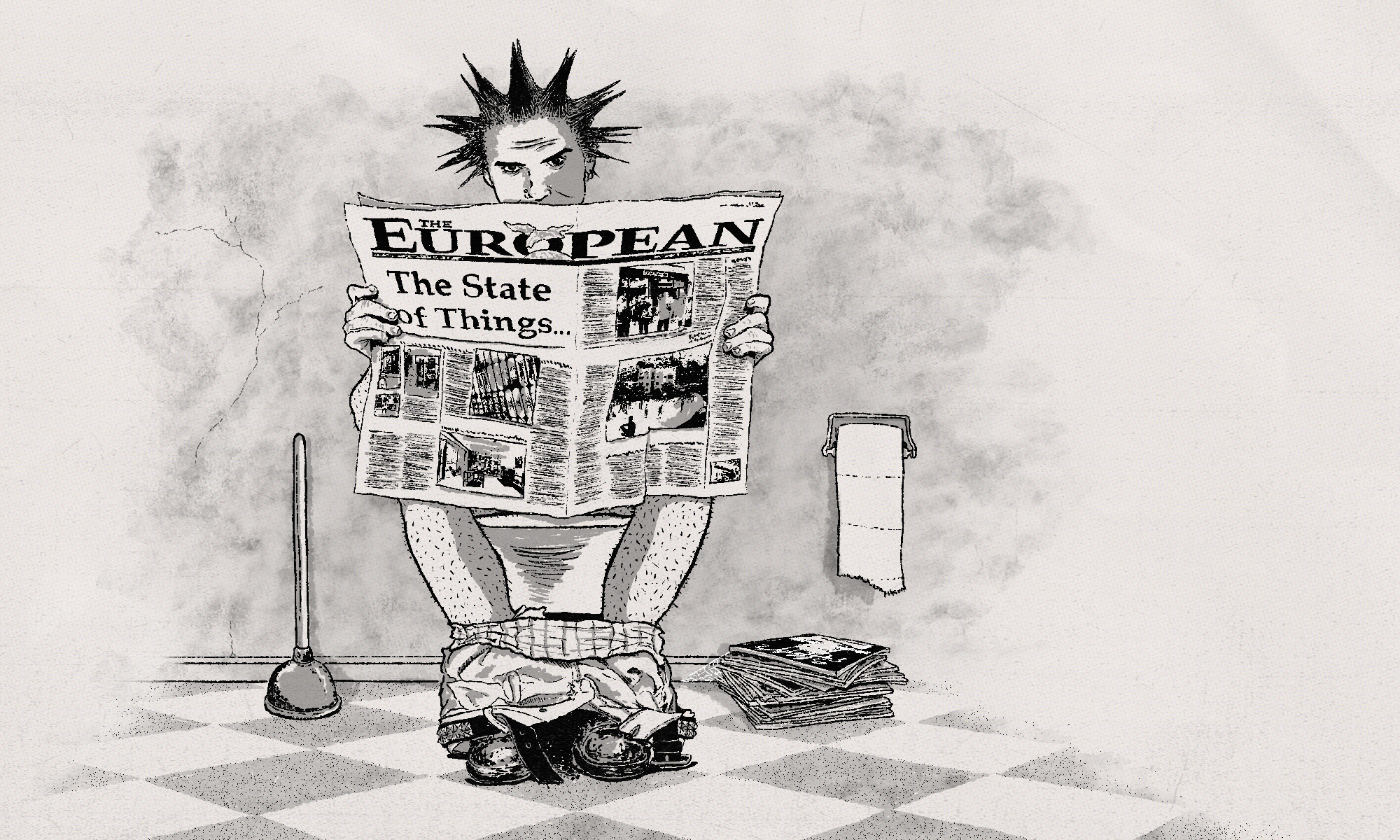
As an average American idiot, I’m never surprised about how little I know of European happenings. It’s not that I don’t find them important, it’s just difficult to take in the smell of your neighbor’s roses when your garden, and quite frankly your entire house, are engulfed in flames.
Though my worldly ignorance is strong, sometimes little nuggets of information make it into my charred home. Most recently this happened when I heard an iconic skateshop in Sweden was experiencing business hardship.
My first thought was: Isn’t Sweden the place where jails look like three star hotels? My second thought was: Is it possible to flunk out of a skate school? And my third, only relevant thought was: Damn, skateboarding is taking it up the A everywhere.
It’s not just American shops that are struggling, it’s a worldwide challenge. And while we’ve done our fair share of reporting on the US shops forced to use plywood to board up windows instead of build ramps, we haven’t heard from European shops.
So that’s what we’ve decided to do today. With the help of our trusty Euro liaison Danijel “Jugga” Stankovic we threw a line out to shops across Europe for an honest look at what’s working, what’s not, and where things are headed.

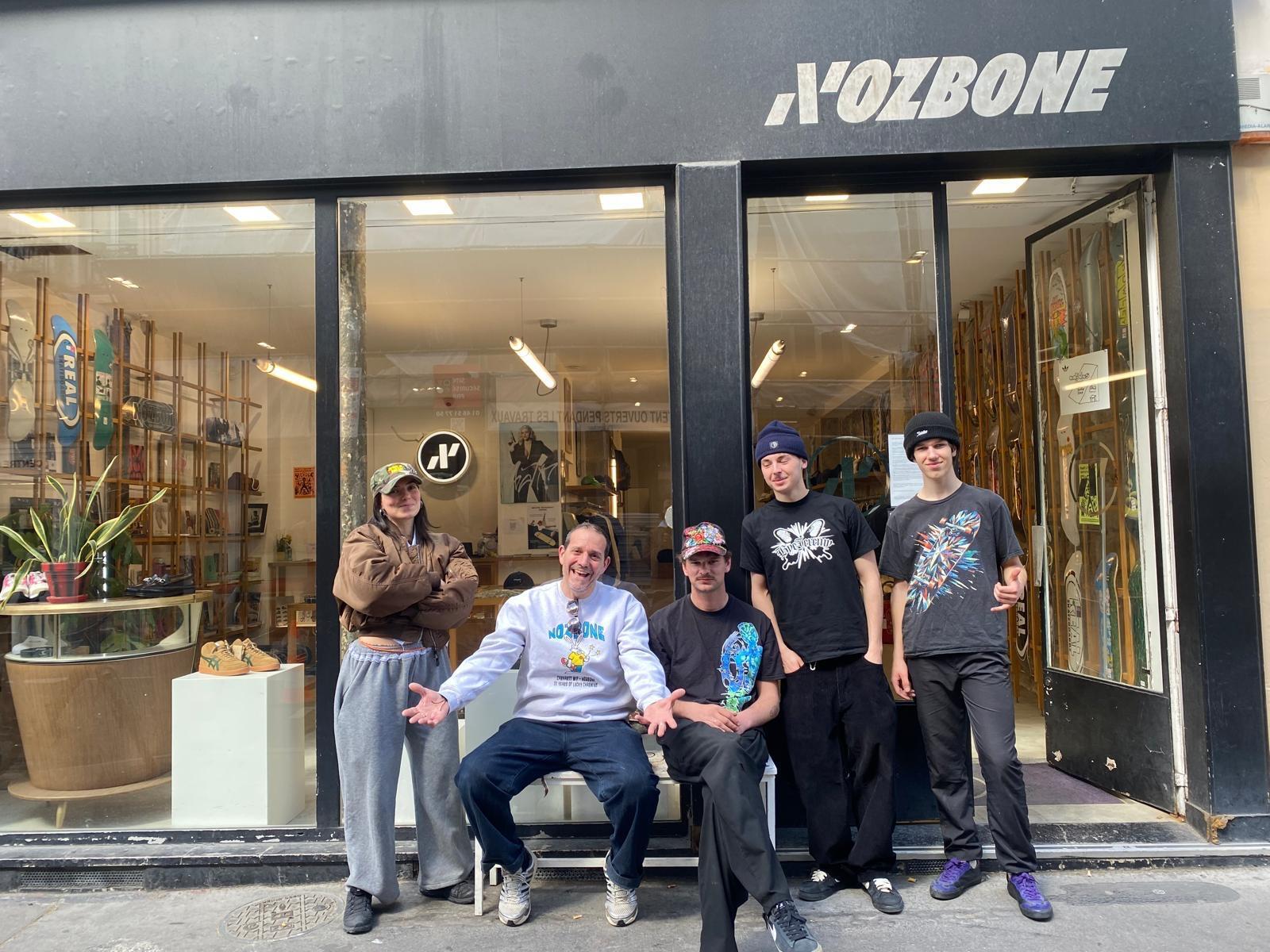
Nozbone Skateshop in Paris, France
Has bringing a new generation of skateboarders into your shop and into the culture been a challenge?
“With the whole Olympic side of skateboarding, it’s pulling in a kind of consumer that doesn’t always see the value in a local skateshop as a community hub, especially when everything the shop carries is just one click away online. I also think brands these days, especially the bigger, more corporate brands, try so hard to be clean and safe with their products that it takes away some of the edge. Sometimes you need people to dislike what you’re doing so others can really love it. That tension feels like it’s missing now.” – Philipp Kroll, Lobby Skateshop
“It’s hard to say. The newest generation is really young, they are 10-13. They are really focused on IG and TikTok. They focus a lot on contest skating. They have less of a bond with the culture and they might not find their way to the skateshop and will just order online. Since everything is more expensive now, the people spending the most are usually parents or older skaters because they mostly have a steady income and know the skateboard culture.” – Niels Cuyvers, Lockwood Skateshop
“It’s a constant challenge, but also the core of what we do. The key is to stay authentic and tell the right story. We’re not just here to sell products, we’re here to transmit the culture. And I think that authenticity is something the new generation really feels, which helps us build a genuine connection with them.” – Alexis Papadopoulos-Frosi, Nozbone Skateshop
“We always make an effort to connect with anyone who comes through the door, but it can take more to break the ice now. A lot of kids are less comfortable engaging, and sometimes it’s harder to find common ground even within skateboarding. You might ask if they’ve seen a new video or part and they haven’t, and it’s clear how much phones and short-form content have changed things. That said, when someone does engage, it still clicks the same way it always has.” – Naoise McCarthy, High Rollers Skateshop
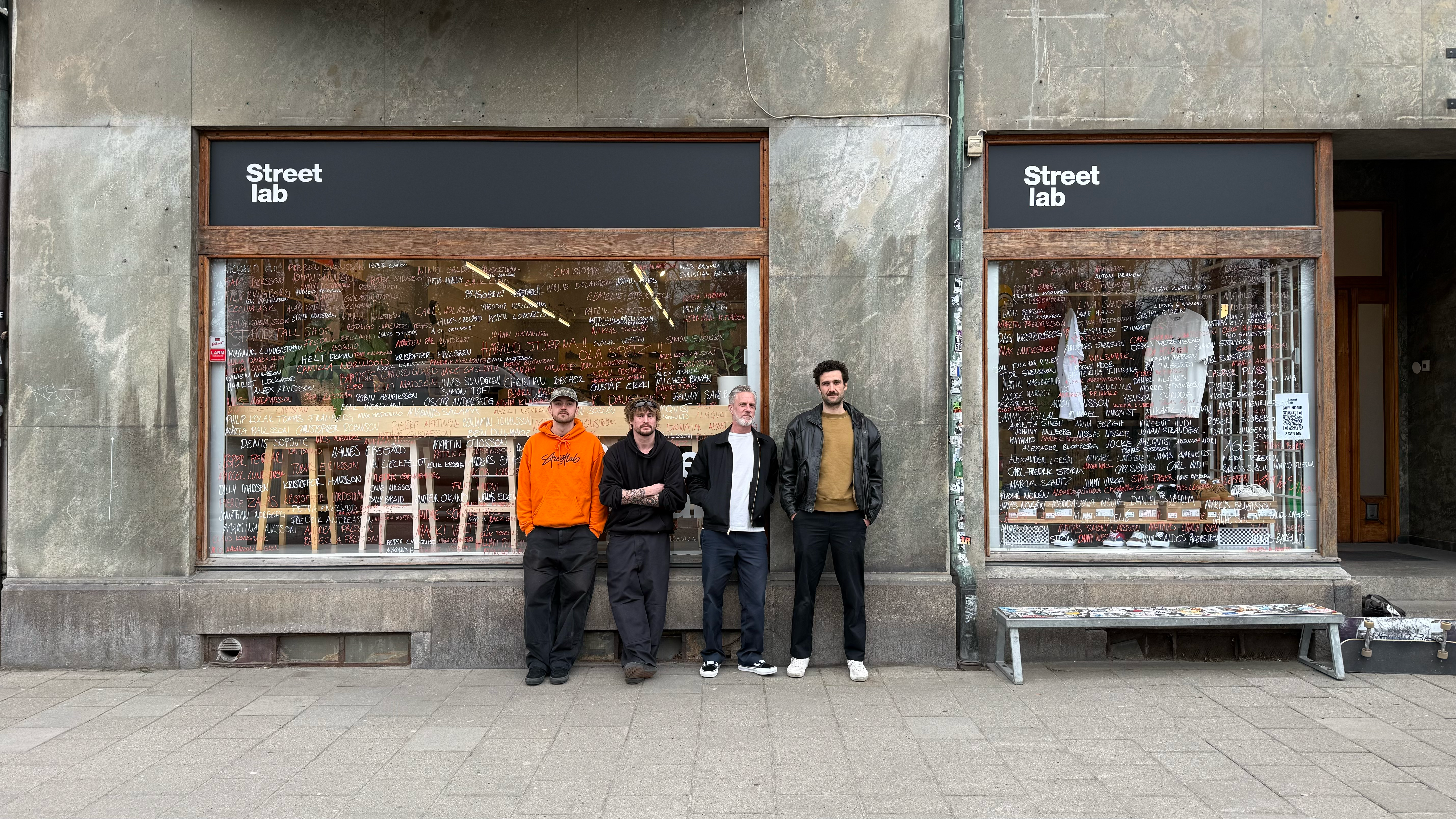
Streetlab Skateshop in Malmö, Sweden
Do American brands do enough to support European retailers?
“I have the feeling that most of the American brands think ‘America first, Europe……..yeah whatever.'” – Simon Schöllhorn, Soo Hot Right Now Skateshop
“Sometimes it feels like American brands do not really care about what happens in Europe, as long as their core market in the US remains controlled and well curated. For this reason, many brands turn to distribution companies in Europe, whose primary goal is, of course, to meet sales targets. Brands often give retailers a lot of leeway, but this usually leads to excessive distribution, as the products are placed in as many stores as possible.” – Martin Schreiber, Bonkers Skateshop
“Core brands can’t really do much. Corporate brands are hit or miss. Unfortunately, both want us to do events and marketing with no budget. Paying us for our time is the only way we can stay in business. Unfortunately shoes, beers and pizza don’t pay the bills. It feels like we’re being exploited at this point.” – Anthony Roscini, Streetlab Skateshop
“Europe is a very different market compared to the US. It’s much more fragmented, where each country has its own history and dynamics. Cities like London, Madrid, Berlin, Paris, or Milan cannot be compared, and Rome is an even more specific case. Despite being a capital with nearly three million inhabitants, there is often a lack of real support from brands: tours, physical presence, investment in the local scene, events. Today, the vitality of a shop in a capital like Rome depends almost entirely on our ability to build connections and activate the local scene.” – Alessandro Bellante, 7 Hills Skateshop
“Historically, American brands haven’t always done a lot to support European retailers, although I do feel that some of them are improving. That said, often communication goes through distributors, which can create some distance from what is really happening on the ground. For me, meaningful support would mean being more present locally, coming to Europe, spending time in the shops, and really experiencing the scene.” – Alexis Papadopoulos-Frosi, Nozbone Skateshop
“I feel like the demand in American brands is decreasing a lot. There are a lot of decent European brands that do good stuff. I think traveling is a big thing. There was a time where demo’s etc would be inspiring, I feel like this doesn’t happen as often anymore. Being around a crazy demo would boost interest in a certain brand back in the day. Just meeting and seeing pro’s would get people inspired.” – Niels Cuyvers, Lockwood Skateshop
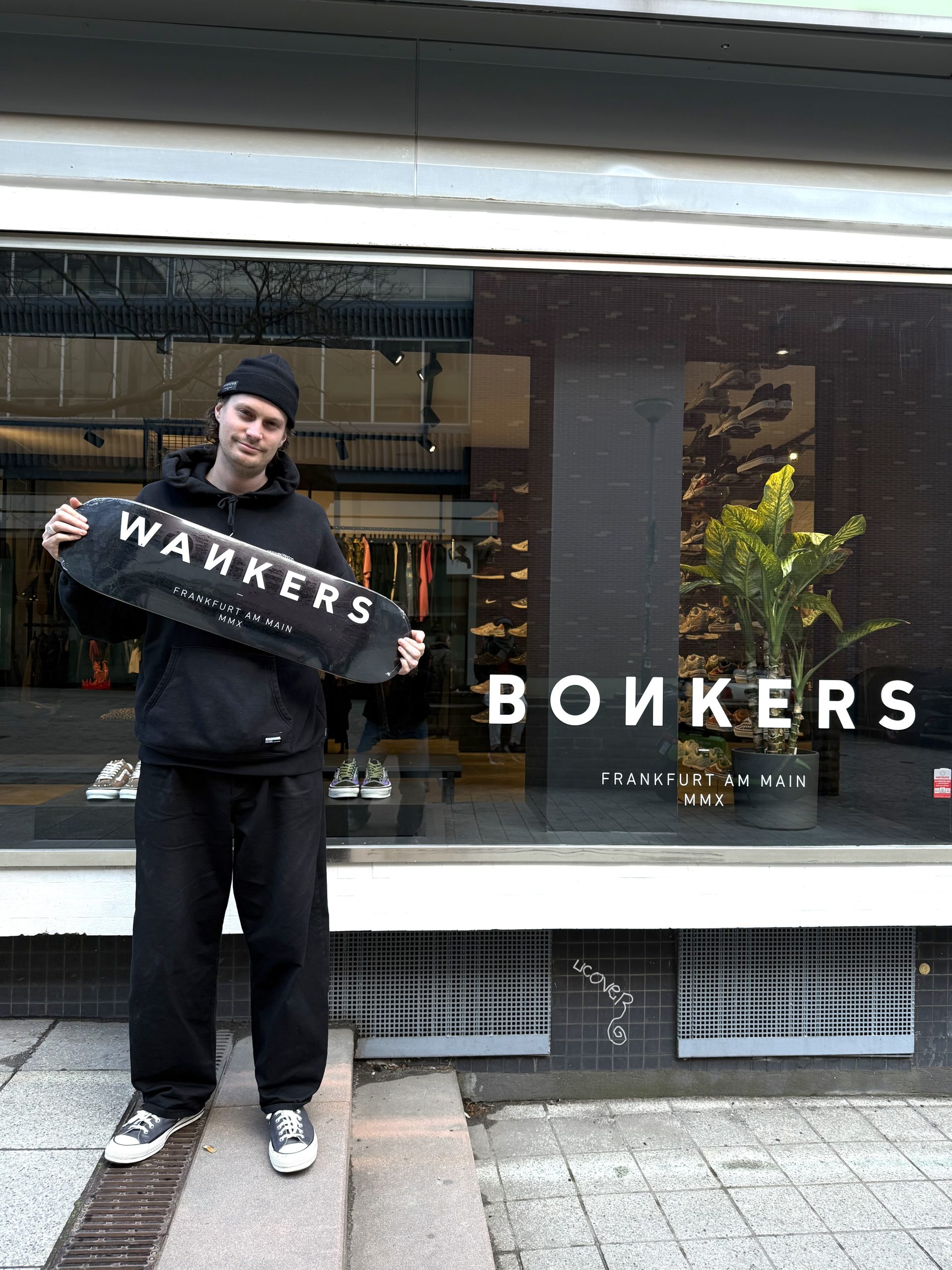
Bonkers Skateshop in Frankfurt, Germany
Where are brands falling short?
“At times it feels like things are moving very fast, with constant new releases and a lot of overlap between brands. When everything starts to look similar, it’s harder for anything to really stand out.The brands that connect best are the ones that stay true to their identity and offer something unique that stands out.” – Naoise McCarthy, High Rollers Skateshop
“Skateboarding is a subculture and while not everything needs to be extremely selective, brands need to exist in the right environments. Large online retailers certainly have their place, but they are especially useful for people who aren’t deeply immersed in this culture. But if they have access to every product and run extreme discount campaigns, core skateshops cannot compete. This damages both pricing and brand perception. Brands need to step back, become more selective again and choose their partners more carefully.” – Martin Schreiber, Bonkers Skateshop
“A lot of customers now care more about where the product is made, the quality, the fit, and the materials. Before, that was not really the case, they were buying more for the brand itself. And a lot of good skate brands don’t really care about that and just go for cheaper blanks/products to make their hats, tees, hoodies so that is not really working for the customers, even if they like the brand they will not pay that much for a Gildan tee with a screen print.” – Gabriel Mafra, Cybercafe Skateshop
“The idea of a pro model shoe is something kids don’t really care about anymore. There are so many good skaters out there, I think the pro’s that brands choose to promote aren’t necessarily kids favorites. Just because there are so many different skaters. Also trends change faster than brands can adapt to.” – Niels Cuyvers, Lockwood Skateshop
“Make shit less accessible, let it have more edge. Listen to your retail partners. Don’t let 40-50 year olds decide what’s cool for teenagers.” – Philipp Kroll, Lobby Skateshop
“Pricing has become a major issue. Some brands have increased prices to a level that isn’t always justified by the product or the authenticity behind it, especially in the current economic climate. Customers can see through that. Price doesn’t make a brand better, the value, the story, and the credibility do.” – Alexis Papadopoulos-Frosi, Nozbone Skateshop
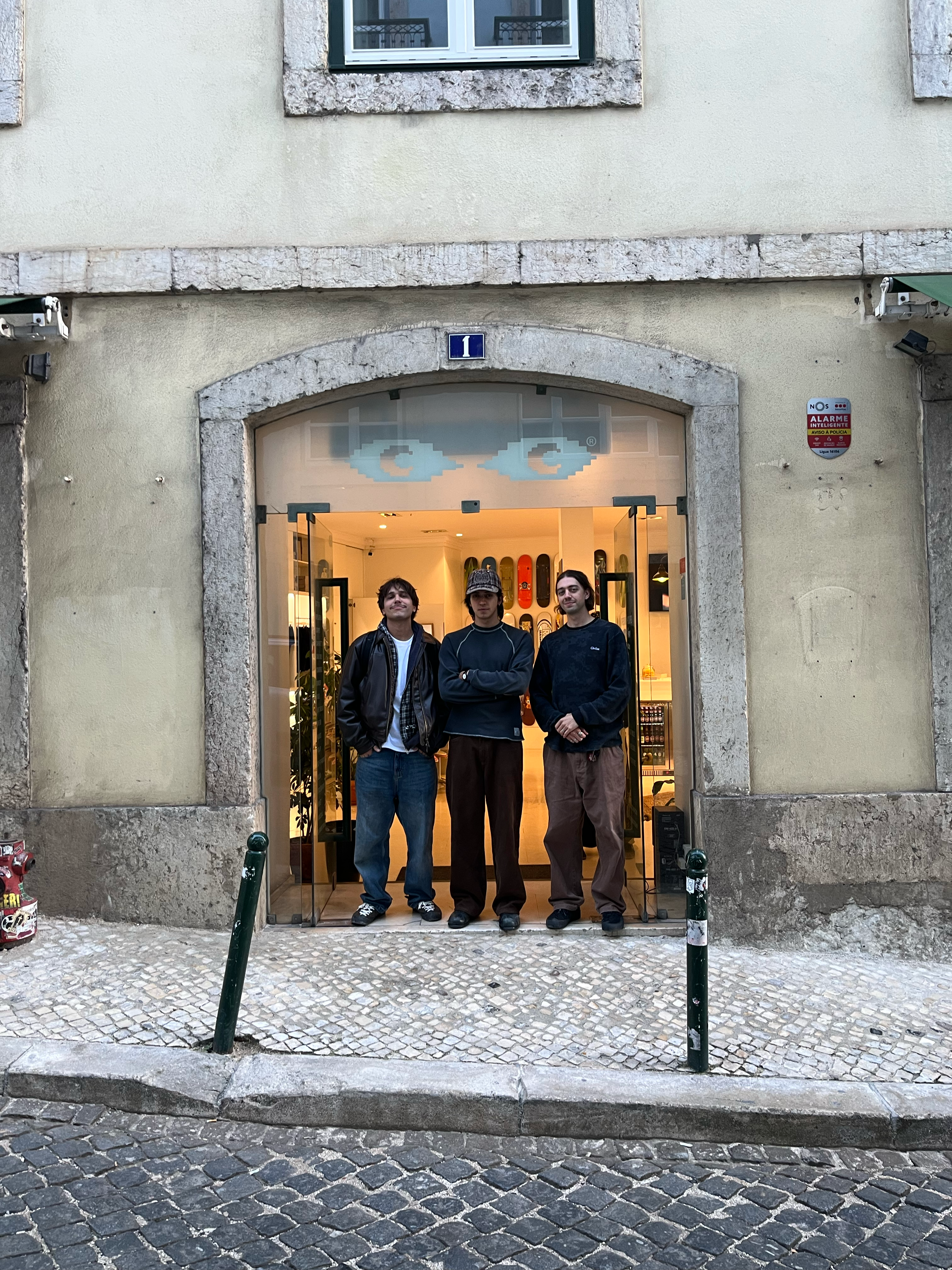
Cybercafé Skateshop in Lisbon, Portugal
Who’s doing it right when it comes to building something sustainable?
“It’s really tough for smaller brands to do anything for us as they are experiencing the same things we are. But what helps, and is a lot of fun too, is collaborations. We did one with the Andrew Miami guys for instance. We did a shirt together and they travelled through Berlin and we did a pop up store here. It was sick and it brought our cities together. It also helped us both reach new customers.” – Alex Foley, Civilist Skateshop
“Violet works well for us because it’s kind of the last brand with a more selective distribution policy. Village PM is also a great example. They’ve avoided big online retailers and focused on a very selective distribution strategy. Now in their third season, it’s working extremely well for us. Sales are stronger than with most corporates.” – Philipp Kroll, Lobby Skateshop
“I think there are still relatively few brands that are genuinely committed to sustainability, even though it’s a major topic today. Some outdoor brands are leading the way like Patagonia, Rab and some others by combining product quality, durability, and a real commitment to environmental impact. There are also interesting examples in footwear like Veja, who have built a strong model around responsible sourcing.” – Alexis Papadopoulos-Frosi, Nozbone Skateshop
“I think Village PM is currently doing a very good job. They are building a product that comes from skateboarding, while keeping distribution selective and focused on the right shops, whether they are skateshops or carefully chosen fashion retailers. The key is that the stores are well selected and aligned with the brand.” – Martin Schreiber, Bonkers Skateshop
“Deluxe has been doing it right since day one, but prices in Europe are too high.” – Benoit Gonsolin, Wallstreet Skateshop
“Village PM is doing well. We are really curious to see what Asics will do in the rest of Europe. Right now it’s only available in France but it’s making its introduction this month.” – Niels Cuyvers, Lockwood Skateshop
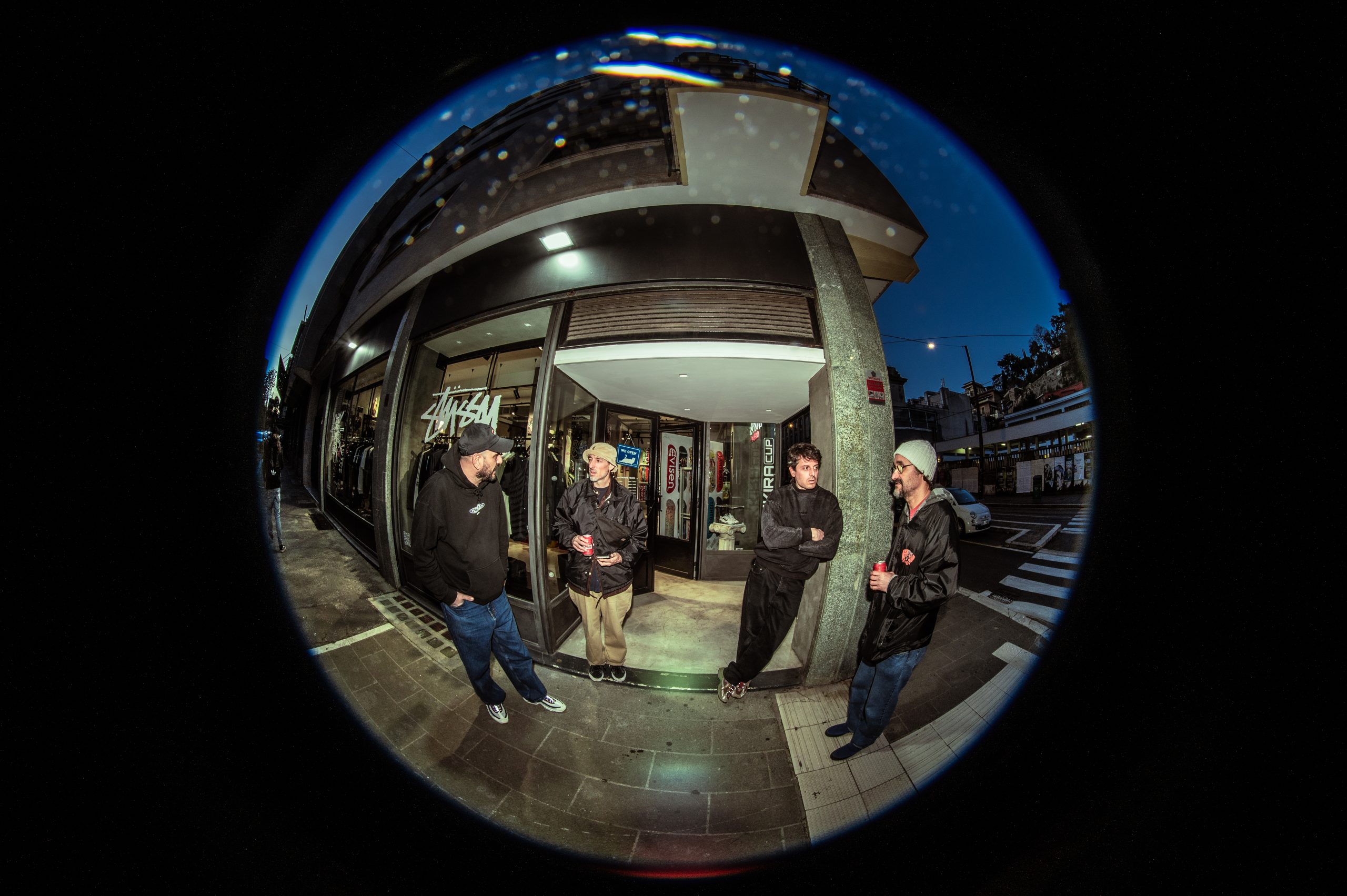
7 Hills Skateshop in Rome, Italy
Compared to 5 years ago, are there more or less people skating in your city?
“It is hard to say, but it feels like fewer, to be honest. Before, I used to see so many kids and beginners coming to the shop to buy their first skateboard, and today that happens much less for sure.” – Gabriel Mafra, Cybercafe Skateshop
“Fewer. Isn’t that the case everywhere?” – Anthony Roscini, Streetlab Skateshop
“Lately it has been picking up a little, but overall we have fewer people actively skating.” – Philipp Kroll, Lobby Skateshop
“I think there are more people skating today, but not in the same way as before. Skateboarding is becoming more structured and closer to a traditional sport, with lessons, school programs, and clubs. It’s a different approach more focused on progression and performance rather than culture, and this segment doesn’t always translate into skateshop customers.” – Alexis Papadopoulos-Frosi, Nozbone Skateshop
“There are way more parks than before and kids who take skate lessons but they are not really active with the scene. They take skate lessons Saturday, and don’t skate until next Saturday. It feel like skaters today are younger than 15 or older than 35. It’s challenging because I think kids don’t have the culture that comes with skateboarding.” – Benoit Gonsolin, Wallstreet Skateshop
“There are way more skateboarders in our city. The younger generation is crazy. The skateboarding classes are packed, and so are the skate parks. A lot of kids, less teens (we’ve lost GenZ) and a lot of adults. So our work is to get the kids to the shop to show them why it´s awesome to hang in a skateshop.” – Simon Schöllhorn, Soo Hot Right Now Skateshop
“These days, you see parents who have never skated themselves taking their children to skateboarding schools. This broader acceptance is positive in many ways, but it also has its downsides. A lot of people only skate in skateparks and never really experience street skating. Because of that, they often do not develop the same sense of freedom that comes from skating in the city and making the urban environment your own. So while there are clearly more people skateboarding, the number of people who are truly connected to skateboarding culture has stayed more or less the same.” – Martin Schreiber, Bonkers Skateshop
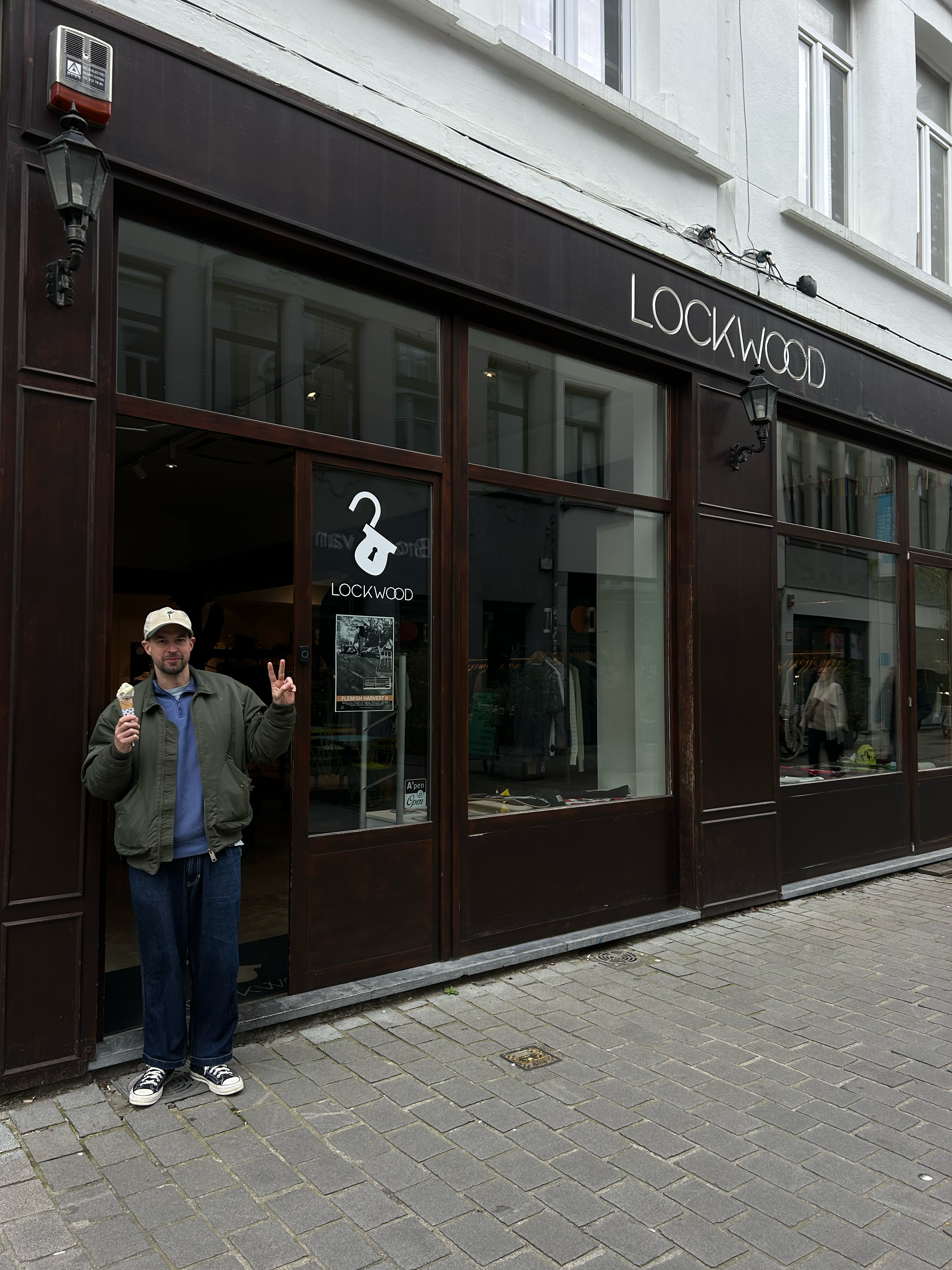
Lockwood Skateshop in Antwerp, Belgium
What needs to change for European skateshops to genuinely thrive?
“There needs to be greater protection for those physically present in the territory. Distributors and brands should prioritize those investing in real spaces and local communities. It is not sustainable to compete with companies operating purely online, without physical infrastructure and without contributing to the scene.” – Alessandro Bellante, 7 Hills Skateshop
“When shops have to compete against the very brands they sell in their own stores, that’s a big problem. And that’s where we’ve been for a while now. It’s tough when we get new stock that’s already on sale at the brand’s own web shop.” – Simon Schöllhorn, Soo Hot Right Now Skateshop
“I think over the last couple years a lot of skateshops got really codependent on footwear brands, because they were selling really well and everything else was more like extra. But “fashion” has moved away from skateboarding shoes, and even skaters are not using skate shoes when they are not skating. Shops got stuck with stock, had to make promotions, and now have no budget to invest in other products that would be working much better. Big brands should be able to help in these situations. The responsibility, if a product does not work well in the market, should not fall only on the skateshop.” – Gabriel Mafra, Cybercafe Skateshop
“Skate shoes have increasingly become more like sports equipment rather than something culturally relevant. Younger consumers don’t really wear skate shoes for lifestyle anymore; they mostly wear them only when skating. When I was younger, skate shoes were part of my identity, I wore them all the time, no matter the occasion. That’s no longer the case. Today many skaters switch between different styles depending on the situation, from running shoes to dress shoes. Skate shoes have become more functional than cultural. That shift could be manageable if brands allowed certain skateshops to access a broader product range so we could serve customers more holistically. But instead, brands tend to prioritize accounts that fit certain corporate criteria, rather than recognizing that many skateshops are more deeply rooted in subcultures than most sneaker retailers and could authentically sell a lot of the product. Unfortunately it feels like many decision-makers have never truly been part of these subcultures.” – Philipp Kroll, Lobby Skateshop
“Overdistribution and constant discounting have damaged both brand value and the ability of skateshops to operate sustainably. Brands need to become more selective again, work with the right partners, and create clear distinctions between different sales channels. At the same time, brands, especially corporate ones, need to invest more into local shops.” – Martin Schreiber, Bonkers Skateshop
“We’re not just retailers, we’re a key part of the community. Shops have become showrooms, event spaces, and platforms for community engagement, both physically and on social media.That means the business model also needs to evolve. Brands should recognize the value of what shops bring in terms of connection, storytelling, and activation and find ways to better support and collaborate with that. In the end, it’s about building stronger partnerships and creating a model where the value of community and local presence is properly recognized.” – Alexis Papadopoulos-Frosi, Nozbone Skateshop
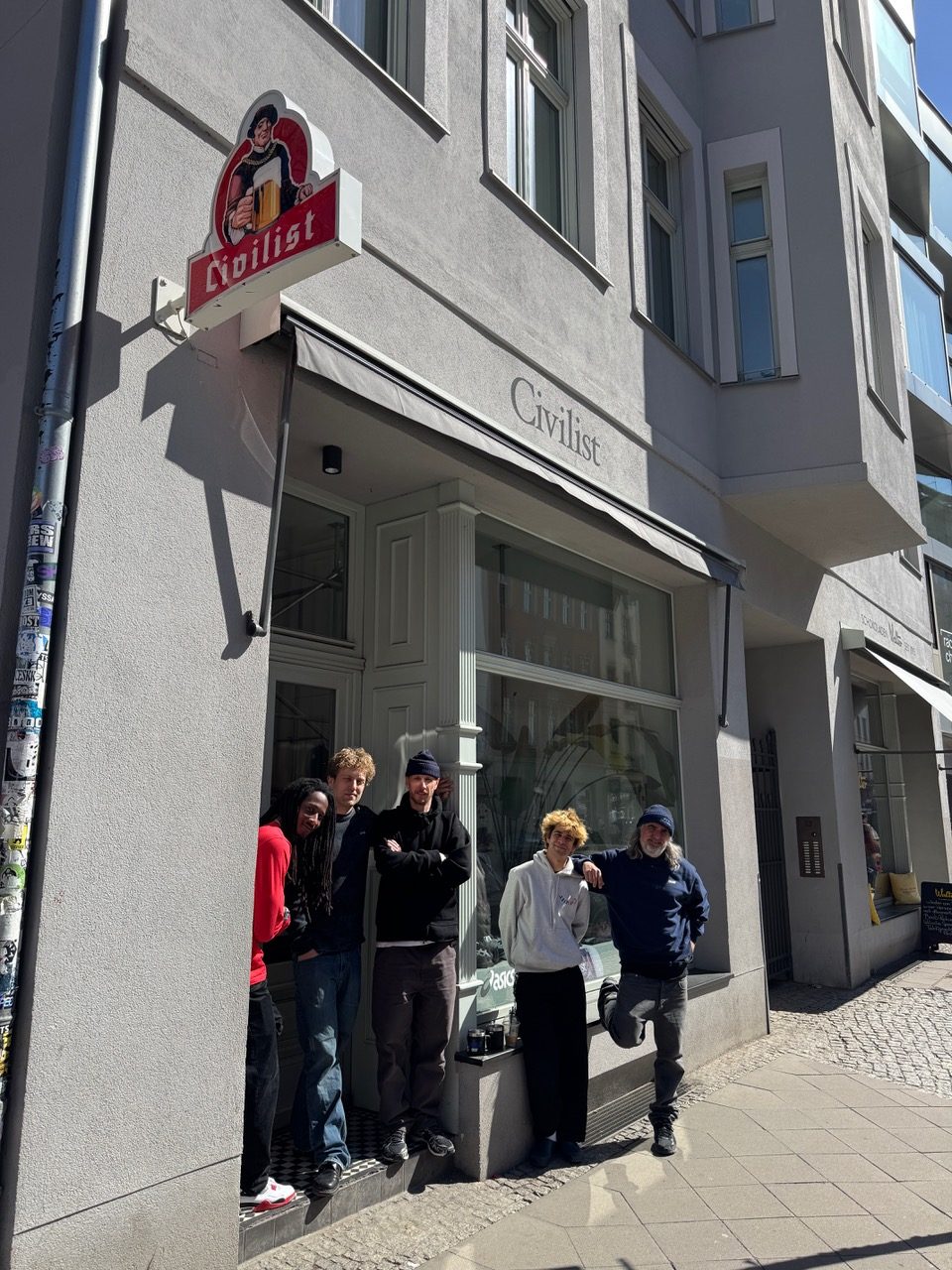
Civilist Skateshop in Berlin, Germany
What changes have you made to adapt to the current economic climate?
“Cut down costs. At a certain point we had eleven full time employees in the shop. This has scaled down to three. It’s a mission to get the fixed cost to a minimum. This also means working harder.” – Niels Cuyvers, Lockwood Skateshop
“We unfortunately had to let go of many brands in our portfolio that started working with larger online retailers. We are looking for new, more selectively distributed brands and are producing more products ourselves. It feels a bit like 15 years ago where a lot of the cooler brands at the time started working with mall shops and were kind of replaced by the new generation of brands that popped up at the time. I’m hoping the new generation will value what good independent retailers can offer.” – Philipp Kroll, Lobby Skateshop
“Ordering less and trying to keep the stock level lower, otherwise more and more stuff has to go on sale. In the last couple years outdoor sports like hiking and climbing got bigger so we adapted and started to carry brands like Gramicci for instance. I hope we don’t have to do bigger adaptations in the future.” – Alex Foley, Civilist Skateshop
“The most important aspect is that we are now increasingly focused on in-house production: developing projects ranging from skate hardgoods to apparel, with the goal of building a stronger and more autonomous identity.” -Alessandro Bellante, 7 Hills Skateshop
“We started focusing on brands that have a cultural connection to skateboarding, even if they are not strictly skate brands. We looked for brands that fit naturally into the culture, have a strong background and are not available everywhere. The goal was to put together a collection that feels unique and offers customers something different from what they constantly see in the social media campaigns of major skateshops.” – Martin Schreiber, Bonkers Skateshop
“European shops need to focus more on European brands and build up their own brand with your shop. Work together with local artists and make your own merch and boards. Most of the shops have a skateboard team, make videos and support the local scene. So make a local brand out of it.” – Simon Schöllhorn, Soo Hot Right Now Skateshop
“We are shifting our strategy to not depend only on product sales. We’ve been developing work as producers for video, photography, and events. Alongside that, we have an annex space that we rent for events, exhibitions, any cool projects, and we are opening a coffee shop right in front of the store to further improve the overall in-store experience and build a stronger community around the space, giving people more reasons to come by the shop.” – Gabriel Mafra, Cybercafe Skateshop
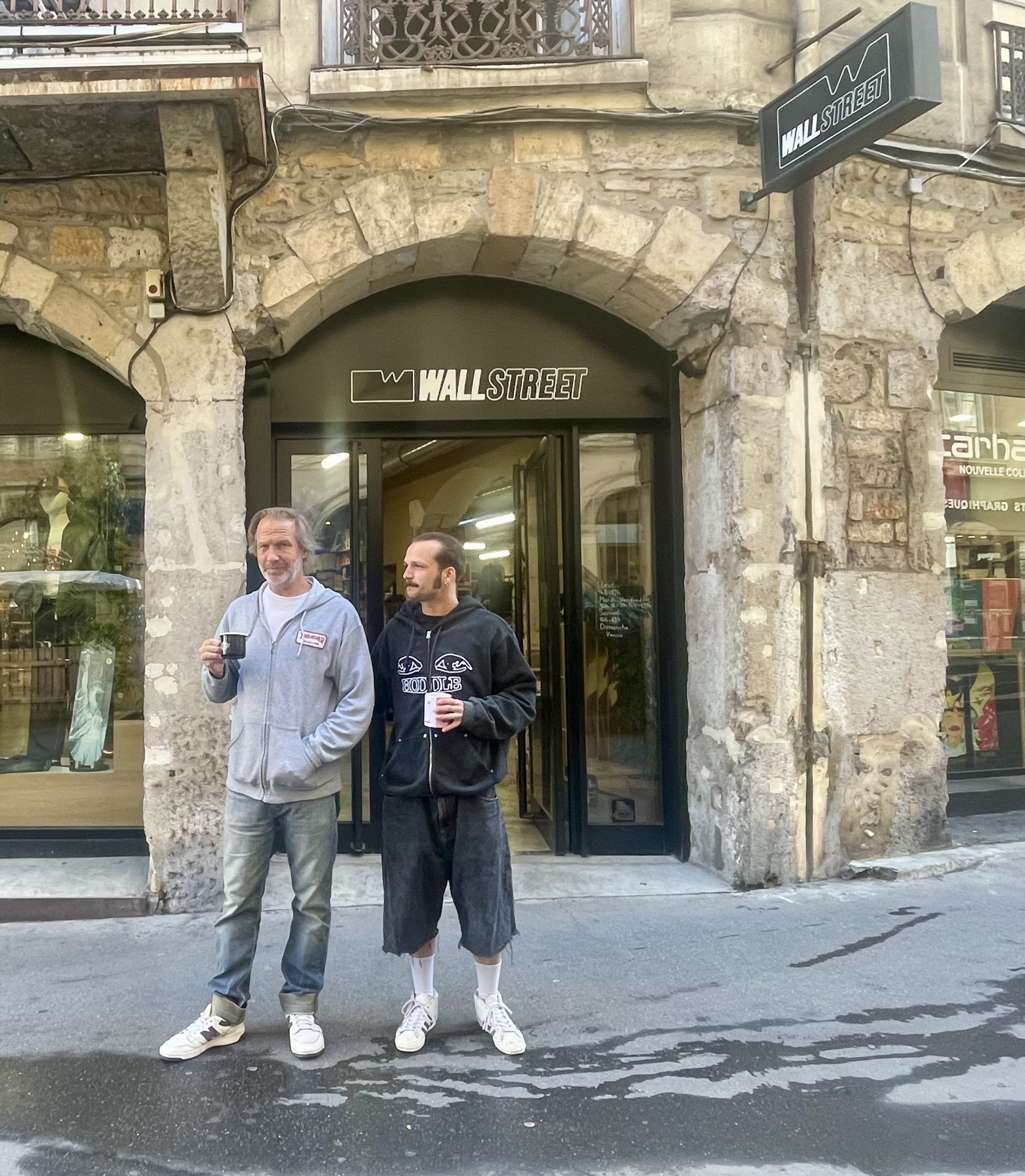
Wallstreet Skateshop in Lyon, France
What keeps you motivated to run a skateshop in 2026?
“It is the dream job after all, working with what you love, meeting so many people, making events, videos, content, skate spots and cool projects. It mixes all my passions in one place. But what motivates me most is that even with all the current struggles in the industry, there is always a project or goal ahead to look forward to and to keep working toward.” – Gabriel Mafra, Cybercafe Skateshop
“We are skaters before we are retailers. We are over 40 and still out in the streets every week. We
don’t observe skateboarding from a distance. We live in the city and keep pushing on rough ground.” – Alessandro Bellante, 7 Hills Skateshop
“Because we’re the fucking backbone of skateboarding. Fuck that question. As a shop owner I still love it so much, I love the connection with the customers, families and friends, I’ve been doing it 50% of my life. So what’s not to love, what’s not to keep me motivated?” – Fredrik Nilsson, Streetlab Skateshop
“It definitely gets harder to motivate ourselves, especially when you get older and you need to pay more and more bills. And on the same hand you have to do politics with the brands, which has definitely gotten worse. So it’s hard to remind yourself sometimes why you love skateboarding. But in the end, we still love what we do. I love the happy faces of kids getting their first skateboard. I love the living room vibes of the shop. It´s still a hub for so many people.” – Simon Schöllhorn, Soo Hot Right Now Skateshop
“Oh man, it’s not easy these days. At times, it’s tough to the point where you start questioning whether it’s all worth it, especially when, as a multi-brand retailer, you’re so dependent on decisions made by others. I think, at the end of the day, you really have to care about skateboarding and the surrounding subcultures to keep going. Lobby is still very much a community hub, which keeps us closely connected to a wide range of people; from young kids just starting skating to the OGs, to the artists and filmers, the people from the club scene and other creatives.” – Philipp Kroll, Lobby Skateshop
The Shop


Related Posts
-
 WE HAD THE INTERN REVIEW OUR LUNCHES
Our overly opinionated intern, Justin, always has a lot to say about our food choices, so we gave him free rein to pick apart our lunches.
-
 IS IT SAFE TO SKATE IN THE TIME OF CORONAVIRUS?
Everything you need to know to keep skating and supporting your skate community.
-
 WHY THE OSCAR-WINNING SKATE DOCUMENTARY MATTERS
"Learning to Skateboard in a Warzone (If You're a Girl)" shows how skateboarding can be so much more than just skating.
-
 LEFT ON READ: JULIAN LEWIS
Our series where your favorite skaters share notes, camera roll photos, memes, movie recommendations and more.
-
 WE TRIED BUYING RARE NIKE SB DUNKS OFF THE DARK WEB
Could the Dark Web potentially be the plug for future SB drops?
-
 LOOKING INSIDE THE WORLD OF SKATE ACADEMIA
Here's five pieces of skate scholarship along with oversimplified takeaways to get your mind juices flowing.
-
 THE WORST CASES OF SWAMP ASS CAUGHT ON FILM
Summer’s quickly approaching, and nothing is more synonymous with a mid-day summer skate than swamp ass.
-
 HOW BROOKLYN GOT ITS OWN EUROPEAN STYLE SKATE SPACE
Under The K Bridge Park is a new type of skate space that we'd love to see more of across the US.
Comments
Popular
-
 KEITH HUFNAGEL ON THE FUTURE OF HUF
We heard a rumor that HUF was going out of business, so we talked with boss man himself to find out.
-
 PARADE WORLD IS RETHINKING THE WAY YOU BUY SKATE GOODS ONLINE
Now you can buy skate goods online and support a local shop at the same time.
-
 THE DAY AFTER 9/11 THROUGH THE LENS OF SKATE PHOTOGRAPHER MIKE O’MEALLY
"The streets were so empty. People were kinda waving us on, it was a weird optimistic outlook."
-
 SKATERS RECOMMEND THEIR FAVORITE SKATE PANTS
We hit up some pro skaters and Jenkem contributors known for their 'fits to offer recommendations.
-
 GETTING KINKY WITH DANIEL VARGAS
Daniel Vargas' philosophy on whips, chains and getting choked out.
June 13, 2026 10:57 am
Bonkers isn’t a Skateshop really. Neither is the Munich shop So Hot Right Now. Martin Schreiber does not skate. They are a hypebeast fashion place. That’s why he wants more limited product lines and more exclusive shit. Skaters don‘t even buy those things. I am glad the hypebeast era is over. Stop using skateboarding to sell overpriced fashion bullshit.
June 15, 2026 8:44 am
Both shops you mention sell skateboards, hardware, skate shoes, and carry skateboard clothing brands. Also fashion and skateboarding are not mutually exclusive. Skateboarding is not just a physical activity but also has an aesthetic compontent. As a result, many skateboarders do care about the way they look, and some are willing and able to shell out a little more to wear stuff that‘s not on sale at BlueTomato.
June 15, 2026 9:12 am
Gude Mr. Anonymous 😉
I honestly find it interesting that you’re so confident about who skates and who doesn’t.
I’d genuinely like to know, which shop in Frankfurt is doing more for skateboarding than Bonkers right now?
Who is organizing sessions, contests and events on a regular basis? Who is investing their own time, money, and energy into the local scene? Who is actually working to keep street skating alive and pushing skateboarding forward in the city?
I’m not saying we do everything perfectly. But I honestly don’t see another shop in Frankfurt putting as much into the local skate community as we do.
That’s why I find it pretty hard to take the claim that we’re “not a skate shop” seriously.
To me, a core skate shop isn’t defined by the brands it carries or by selling only skateboard products. It’s defined by what it contributes to skateboarding and the community around it.
Skateboarding has always been a subculture, and it’s constantly evolving. No one gets to decide what the “right” version of skateboarding is or who belongs in it.
And as for me personally, if you’re so sure I don’t skate, it makes me wonder when we last ran into each other at a spot. The truth is, I don’t even know who you are.
Criticism is always welcome. But it’s a lot more meaningful when it’s based on facts rather than assumptions 😘
June 17, 2026 3:57 pm
im gay
June 14, 2026 2:52 pm
1st. American skate brands don’ t give a fuck about the european skateboarding. Always been like that.
2nd. Kids nowadays don’ t give a fuck about the culture of skateboarding.
3rd. Some shops only want to sell product and act like stars.
4th. Kids just want to be like nyjah, Joslin or whatever shows at tictoc or influencers who pretend they’re professionals.
5th. Unfortunally, skateboarding it’s not core anymore. Most of the skaters are clowns, even most of professionals.
6th. Professionals that skateboard contests their entire life and now -because they don’ t have legs for street league – pretend they’re street skaters can suck a dick.
7th. Miss Grosso.
June 14, 2026 7:52 pm
The world has moved on from Americans. I will not buy from their companies anymore.
June 15, 2026 4:01 am
i read only complain of people pretending to be the only seller of every skate product
June 15, 2026 5:35 am
People complain because some of us feel and think skateboarding as a way of life not mainstream nor a sport. It´s good when we use our brain and have a critic eye on our culture. Most of us are not shop owners as you say; we`re “normal” skateboarders who can judge how things works nowasdays, in terms of skateshops or not.