
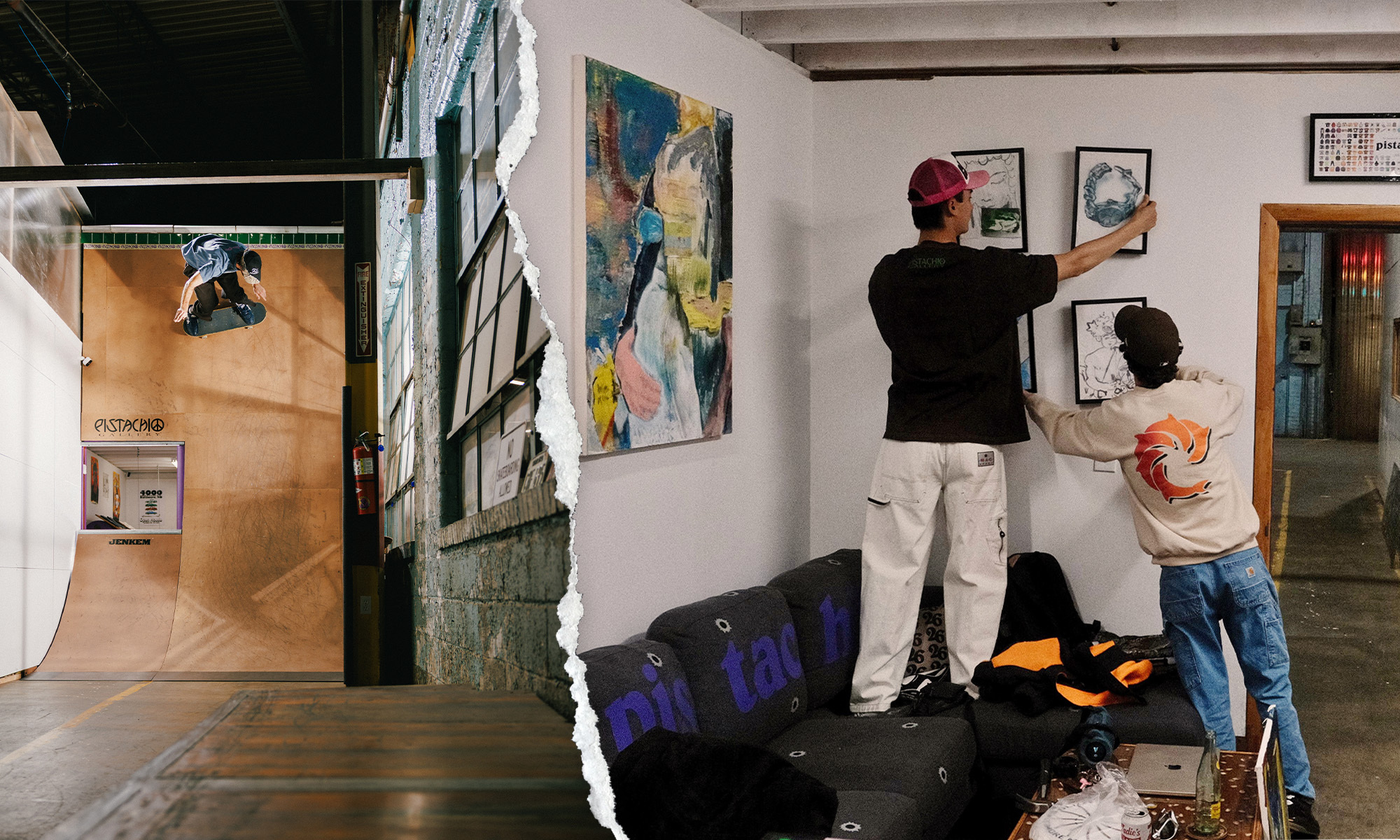
Being a high school teacher in 2025 sounds like a tough shtick. Competing with TikTok to teach the Pythagorean Theorem? That’s the lord’s work right there.
With brainrot levels seemingly rising unchecked, there’s never been a more interesting time to pick the brain of a teacher, especially one that clocks out at school just to clock back into running a lofi, independent art gallery.
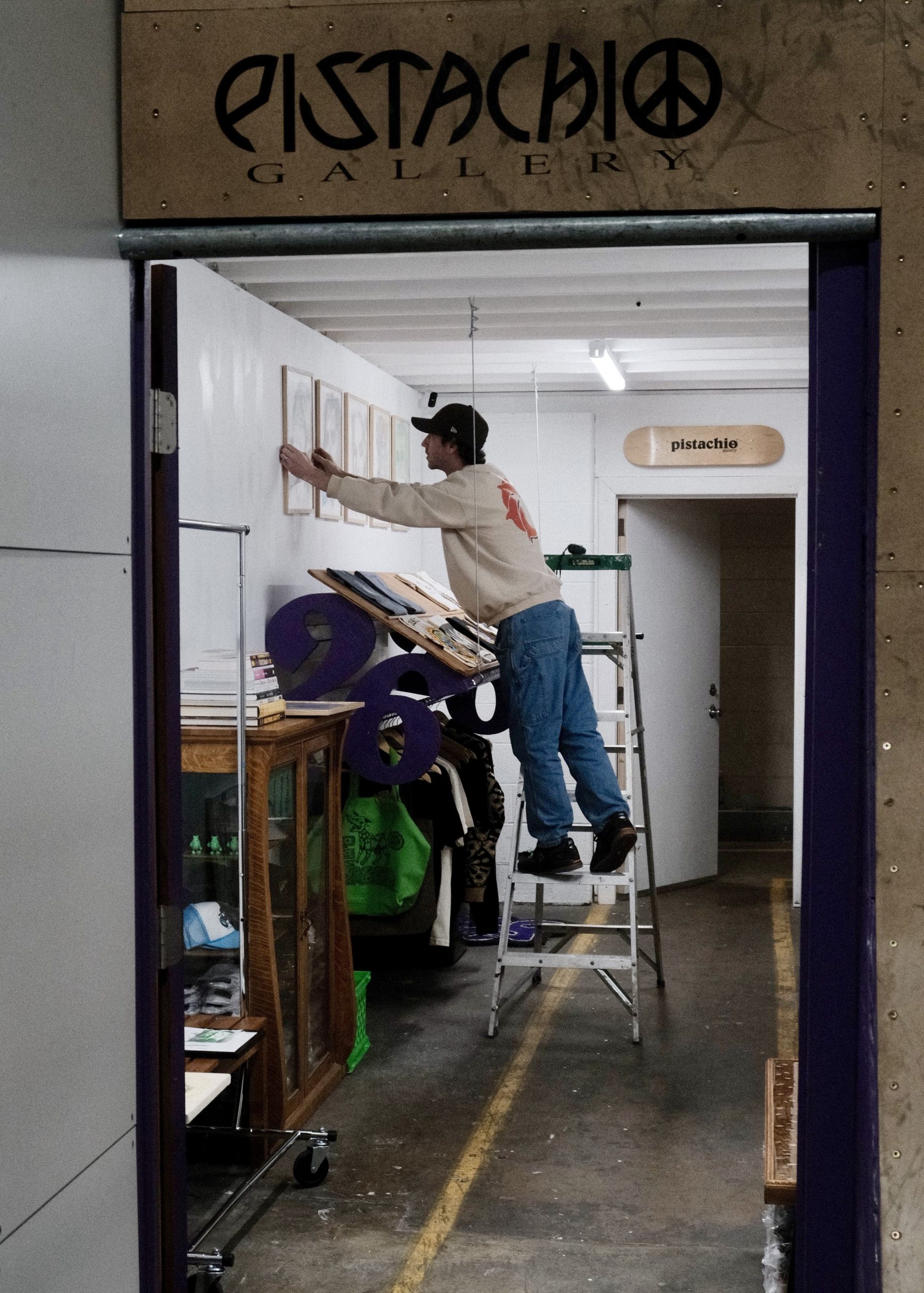
That’s the life of Brendan Nass, a long-time math teacher and owner of Pistachio Gallery in Baltimore, Maryland. With an emphasis on emerging artists, Pistachio is keeping art accessible for a new generation. He’s also got one of the sickest storefronts around: A 15 foot quarterpipe.
It’s this, along with Brendan’s commitment to his community and dedication to the arts, that led me to picking up the phone. Enjoy a conversation about the challenges of teaching today, the importance of local art, and more.

How’d you originally start the gallery?
My first gallery space was in Ellicott City. It’s a suburb outside of Baltimore. The gallery room was technically a part of the apartment I was renting, even though it was completely separate and a different floor. I had a lot of paintings I was making on my own, so I initially started displaying my own work in that space, and it caught traction. A few local artists got involved, and at its height there were maybe 12 or 13 local artists that had work in that space.
Since it was part of my apartment, I wouldn’t have it open a bunch, but it had a big glass door and window facing this really busy main street, so people were walking past it all the time. It felt like there was a mystique element to it as well, because it was always closed [laughs]. People wanted to know what was going on, and I had a sign on the door, but no real advertising of what it was or what the plans for it were. It had some mystery to it.
What went into the decision to move to Baltimore?
Well, Ellicott City has a history of bad floods, and in 2016 and 2018 two flash floods hit. Both severely damaged my building, and in 2018 my building ended up being condemned. I lost access to my apartment and I had to leave behind a decent amount of my stuff. I had to move away completely.
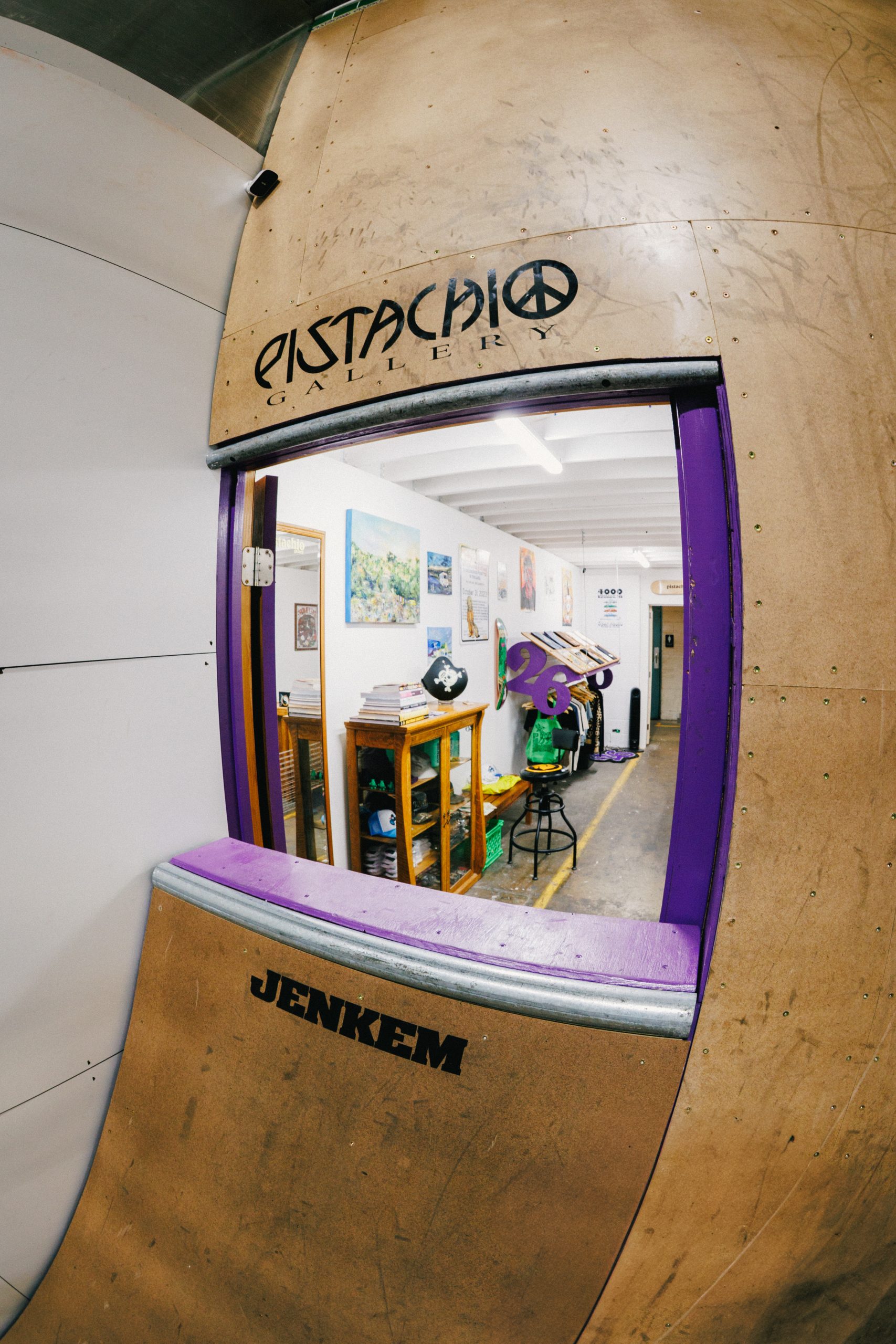
The ramp you build in front of the new gallery is insane. Can you tell me about it?
I’ve always been into building since I was young. Almost as much as I loved to skate, I loved to build, so when we decided to do the gallery, I had the idea to put a vert ramp up against the front wall. I’m not sure the exact height of it, it has to be somewhere around 15 feet, and something like 8 feet of vert [laughs]. It’s a little ridiculous in terms of dimensions. One of the wrestling dudes recently asked me if he could “ninja warrior” to the top of the thing, but it’s masonite, and he almost ate shit.
Wait, wrestling dude?
There’s all types of shit in the building the gallery is in. There’s multiple music studios, a couple woodworkers, artists, and semi pro wrestlers with a full ring that they practice in [laughs]. It’s a pretty interesting group of people. The building used to be a bottle cap factory back in the day.
Have you learned a proper piledriver yet?
No, but I’m pretty sure I could do a backflip off the ropes if I tried. I’ve had my eye on that for a while.
Is there any significance behind the name Pistachio?
It’s a little bit of a play on peanut gallery, and since it’s such a small space, pistachios are smaller than peanuts.
Why do we still need galleries when we have Instagram?
For a lot of people, it’s important to be able to see art work in person and get up close to it, and in such a digital age where it’s so easy to scroll through endless posts I think it’s really special to see a curated body of work, in a physical location, especially if it’s highlighting an individual artist.
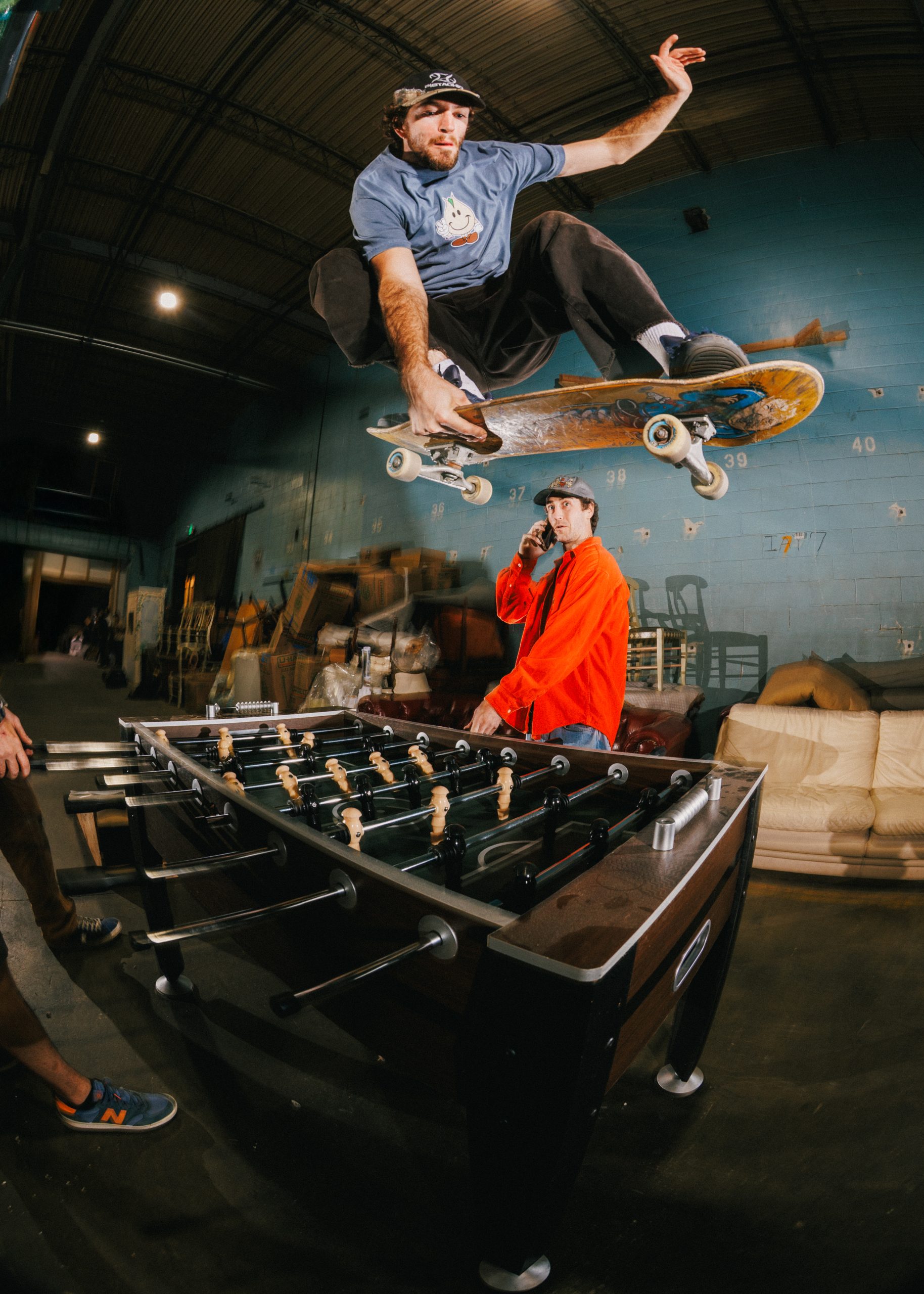
Are you trying to function like a typical gallery selling artwork for “clients”?
I’m selling my own stuff out of the space, so right now I’m not asking for any commission from the artists that have shown their work there. But the goal is for artists to make money, so I’m hoping it catches on. And I’m optimistic that once we get more of these shows under our belt we’ll catch on.
I’m trying to keep things really accessible, and obviously the art world can have this reputation of being pretty pretentious at times, so I want to keep things open to everybody and make it less snobby and less formal.
“The art world can have this reputation of being pretty pretentious at
times, so I want to keep things open to everybody.”
Are gallery shows important to a young artist?
It’s huge. I remember the first time I showed my work in a physical gallery. It was a big confident booster for me, and having people who don’t know you see your work is super empowering. I’m excited to create that feeling for other artists.
How would you describe your personal art style?
Definitely skate influenced. I’ve always been a doodler, but I only took one art class in high school, so I don’t have any formal art training. Back in 2012 my sister passed away, and I used art and painting as a way to get my mind off things. It was like a form of therapy for me.
My favorite style of artwork is cartoon, and my favorite skate artists, like a lot of others, are Marc Mckee and Sean Cliver. My favorite artist of all time is M.C. Escher though. He’s a Dutch mathematician, but also an artist. I got really into him back when I was teaching geometry. I did a full unit on tesselations, which is like puzzle pieces that repeat themselves, and that’s what he was famous for, these really mathematical, technical drawings, almost like sacred geometry. And then there’s another guy, Oscar Reutersvärd, who was a mathematician turned artist as well.
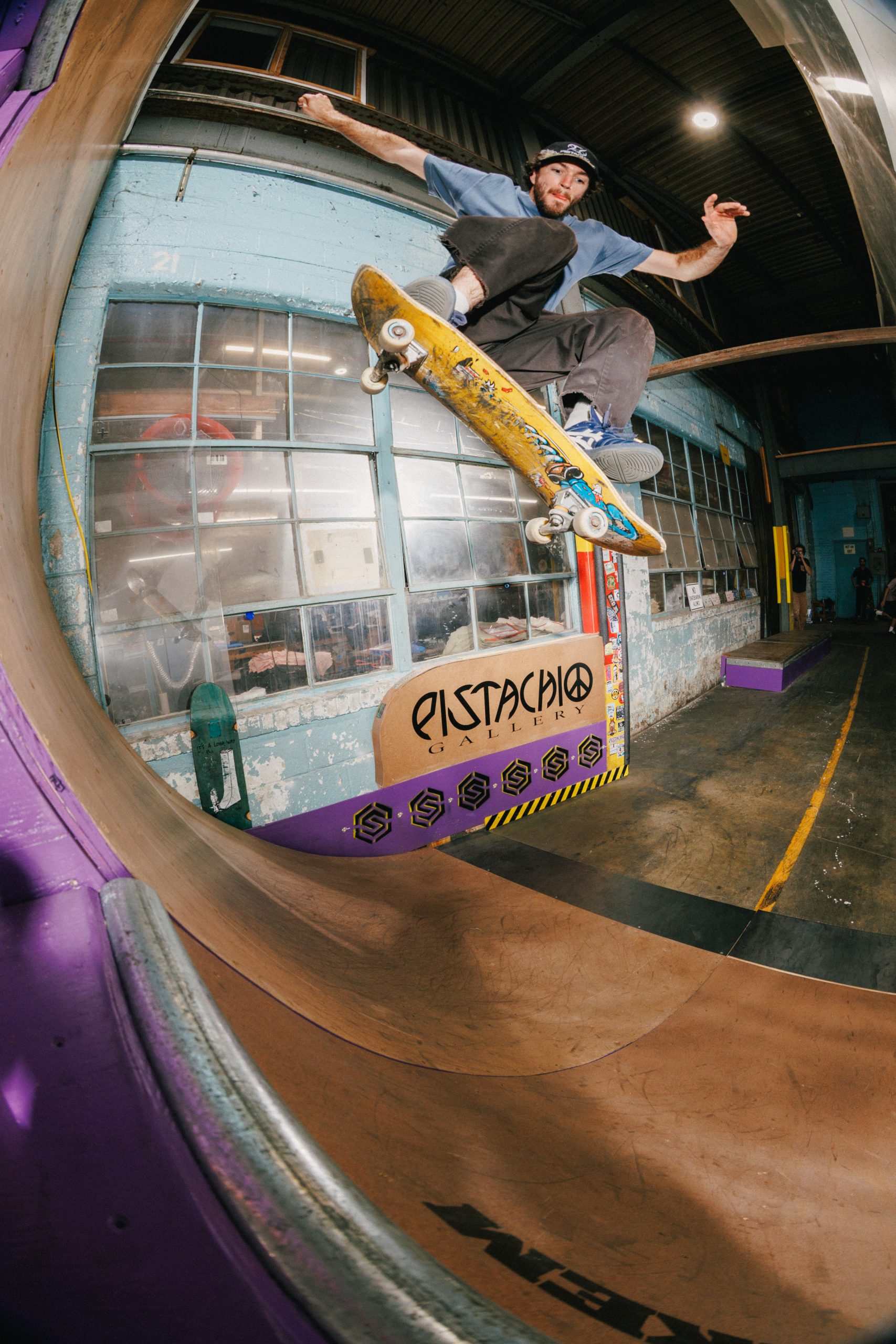
Does Baltimore have a pretty good art scene?
It’s pretty good right now. There’s a lot of DIY shows going on, and while there are some staple larger galleries that have been around for a while, it seems like a lot of smaller gallery spaces are popping up as well. Also, being so close to MICA, the Maryland Institute College of Art, means there’s a constant pool of younger artists coming to the city. From what I know it’s a pretty good school, and we have a seeding program at the high school I work at, so a lot of our students end up getting scholarships and heading right to MICA.
The city seems to have a lot of abandoned factories and infrastructure, yeah?
Yeah, even the school I work in was at one point a clothing factory. It has been abandoned since the late 80s, and there was a bunch of old sewing machines left behind.
Speaking of the school, what is it exactly that you teach?
I teach math to special needs students. I’ve taught math for ten years now, but I’ve been at the Baltimore Design School for five. It’s a 6th to 12th grade public school, but when they hit 9th grade the kids have to choose a concentration. Either fashion design, graphic design, or architecture design. And then all their electives are based around their content areas. They still have their core classes, but all their electives are design based. Also, we don’t have any sports teams or anything. We have a really small gym, and the kids do yoga in it [laughs]. Compared to a regular high school, a lot of things wouldn’t look the same.
What makes teaching special needs different from other teaching jobs you’ve had?
With special ed, you have a whole new case load every year, which means a whole new set of personalities, different disabilities and different strengths. Each kid has an IET, an individualized education plan, that caters to them, and even on a weekly basis you have to come up with new strategies and problem solve.
Teaching normal math I could feel myself getting burnt out, because you are teaching the same course years after year. It gets repetitive. But I don’t find myself getting burnt out with this job. And I’m surrounded by a bunch of cool teachers who are motivated, which is obviously not the case everywhere.
As a teacher, does it feel like this new generation is doomed?
It’s really hard to say. All this AI stuff has been a big obstacle lately, especially when I talk to the English teachers. There is so much plagiarizing, and even the teachers use it. So I think it’s going to be about learning how to control these new tools and use them effectively.
I don’t think this next generation is screwed though, we’re just in one of those transitionary periods right now where there’s so much new technology. Students and teachers are constantly having to adapt.
“It feels like the wild west for all this AI stuff, and we’re all
trying to figure out how to navigate it.”
How do you combat AI in class?
I’ve definitely seen a trend of teachers moving back to paper assignments, especially for exams, because with any assignment on the computer it’s too easy for students to just pop it into an AI chat and get a whole generated response.
I think the key is going to be teaching kids how to use AI as a resource and a tool for their learning versus just becoming 100% reliant on it. It’s pretty hypocritical to tell kids that AI is evil and that they’re not allowed to use it, especially when it’s already built into the tool that we use as teachers. But yeah, it feels like the wild west for all this AI stuff, and we’re all trying to figure out how to navigate it.
Have you ever met a genius, like Good Will Hunting style?
Back before I was a teacher, I was a special ed assistant, and there was this middle school student who you could ask any math problem and he could solve it in his head, like 9,225 x 6,224 or whatever and he’d close his eyes, sit there for a second, and then spit out the answer. He had this real robotic voice and everything, and once kids figured out he could do that they’d always ask him math problems. He would do other stuff too, like he could always guess the temperature outside within one or two degrees. It was crazy.
Do your students know you skate?
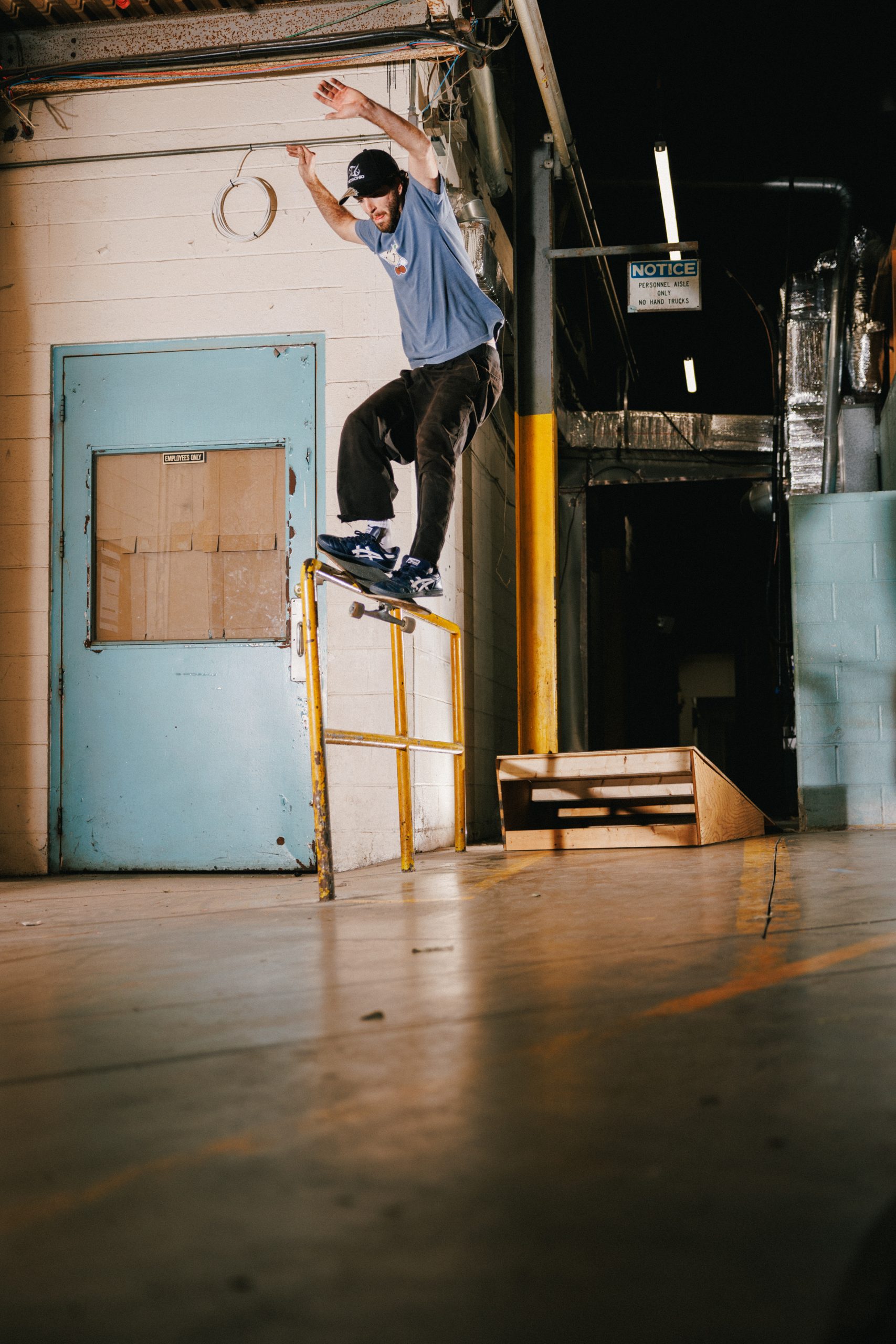
Yeah, I’m actually the teacher sponsor for a skate/snowboard club. It’s super fun, we have around eight kids in the snowboarding program and the skate program has a few more than that. We have a whole range of abilities, like there’s a couple kids who skate outside the program, and then every year there’s one or two kids who have never stepped on a skateboard before. It’s cool seeing the kids push each other, and for the kids that actually get into it it’s a really great outlet for them.
Wrapping up, for someone who might want to create a gallery themselves, what’s a good first step?
Whether a gallery space, clothing brand, or whatever you want to do, try and DIY as much as possible. In the early days, no one is going to care about it as much as you do. And if you’re constantly waiting around for someone to do something for you, it’s going to take way longer. And from a monetary standpoint too, doing it yourself is much better.
Early on I had to learn so much. I had no idea how to build a website or how to do product shots. I had to figure all that out as I went. But it’s ended up helping me so much in the long run, and now I feel really comfortable doing all these things.
The Shop


Related Posts
-
 THE HISTORY BEHIND SOME VERY SKATEABLE SCULPTURES
A bit of context behind some jumbo sized sculptures that border on skate porn.
-
 WE WENT TO LURKER LOU’S ‘WASTE NOT WANT NOT” ART SHOW
One man's old VHS tapes are another man's art exhibition.
-
 A LOOK AT SOME OF SKATEBOARDING’S BEST ANIMATION MOMENTS
Animations can capture the personality quirks of our favorite skaters and throw them into fictional situations that a VX or HPX can’t.
-
 BREAKING THE MOLD OF TRADITIONAL OIL PAINTING WITH SKATEBOARDER ANDREW BARNES
A skateboarder and graffiti artist, Andrew’s art accentuates urban dystopia through the quiet capture of the mundane.
-
 THE DIY ART GALLERY RUN OUT OF A BOX TRUCK, THIS IS U-HAUL GALLERY
Breaking down all barriers to entry, this gallery on wheels is bringing art back to the public.
-
 ELI REED AND HIS MOM SHOW US SOME OF THEIR ART
Even pro skaters get embarrassed around their parents.
-
 PEEP THESE TWISTED THRASHER COVER PARODIES
This sort of ’90s-inspired comic-idiocy is getting harder and harder to come by in skating.
Comments
Popular
-
 KEITH HUFNAGEL ON THE FUTURE OF HUF
We heard a rumor that HUF was going out of business, so we talked with boss man himself to find out.
-
 WHAT EXACTLY HAPPENED TO SKATELINE? AN INTERVIEW WITH GARY ROGERS
Skateboarding's high-energy news anchor opens up about fame, hate, and what it was like hosting a show for 12 years.
-
 HANGING OUT WITH ANDREW HUBERMAN, SKATEBOARDER TURNED NEUROSCIENTIST
Curious what it would be like to hang with this guy outside of a stuffy podcast studio? Us too.
-
 RAW TAPES: NOT ANOTHER SWAMPFEST EDIT
Somewhere in between Woodstock 99 and a redneck civil war re-enactment.
-
 HOW ONE SKATER TURNED A FROZEN RIVER INTO A SKATEPARK
Ilya Batrakov skates remote spots made of ice on the breathtaking frozen Iskona River in Russia.
November 23, 2025 2:58 pm
This made my day. Good shit Brendan and Jenkem.
November 25, 2025 3:35 pm
Such a sick article. Thanks Jenkem y’all are awesome
November 30, 2025 5:01 pm
Recently I realized how quickly stress was draining my energy, even on calm days. I started adding slow morning stretches, drinking more water, and stepping away from screens whenever I felt overwhelmed. While browsing different wellness discussions, I briefly checked https://trensteroid4you.com/ just to understand what people encounter online. These small adjustments already help me feel more steady and focused.