
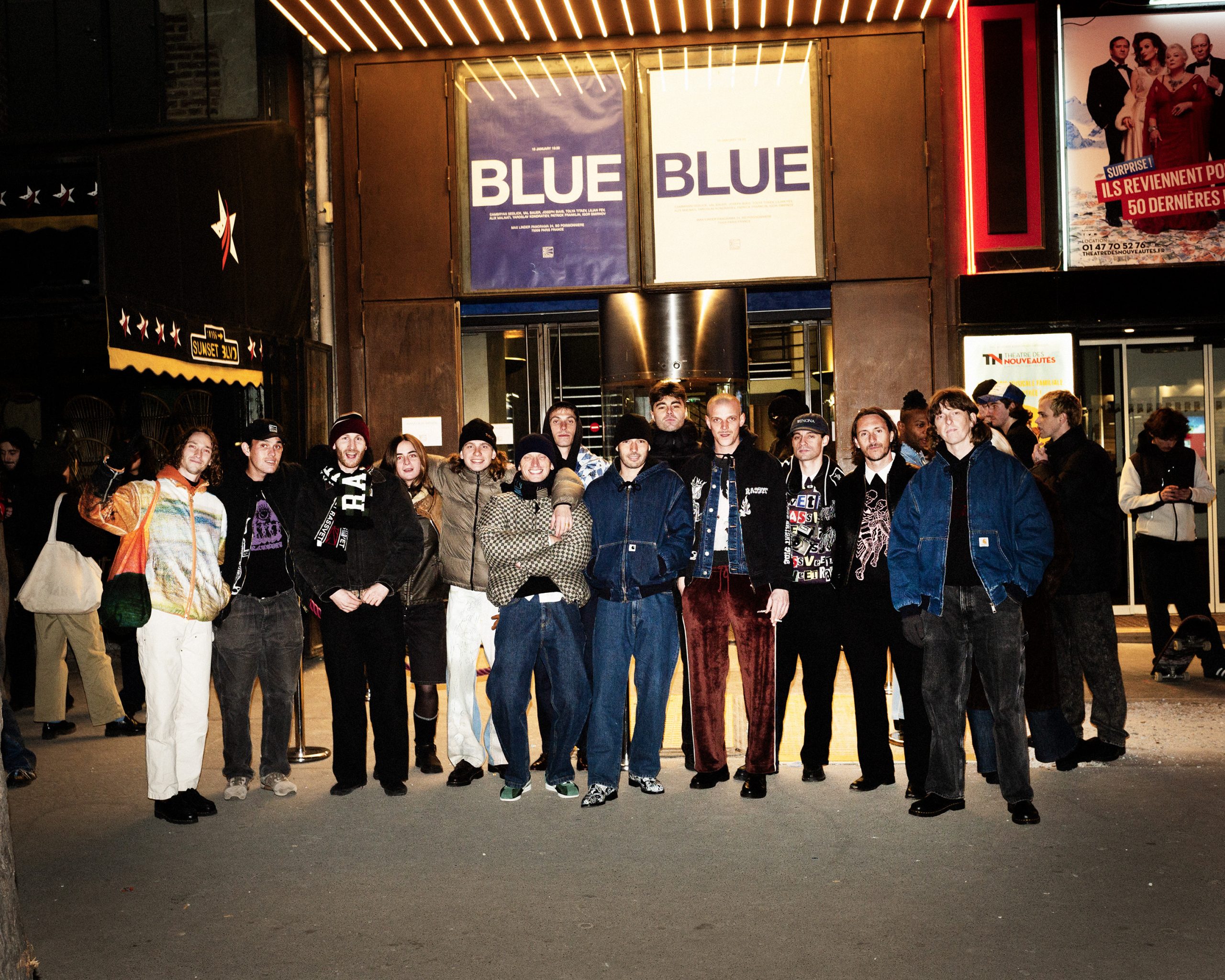
Rassvet Skateboards is dificult to define. Launched in 2016, the company straddles skateboarding, streetwear, and high fashion while not looking out of place in any one. And ten years in, Rassvet feels at the precipice of something bigger.
Through working with Comme des Garçons and Dover Street Market Paris, the brand has become a fashion up-and-comer. Akin to Stüssy and Palace, Rassvet is committed to creating tasteful, high quality clothing.
At the same time, they’ve beefed up their team with two new pros, Remy Taveira and Austyn Gillette, as well as young Amin Sharif. With this much going on, you’d think Rassvet would be stretched thin, but instead they are looking more confident than ever.
To celebrate ten years, we reached out to Founder and Creative Director Tolya Titaev to talk about how the brand has changed over the years, the intersection of fashion and skateboarding, and more.

Your latest collection was looking back, revisiting some staple graphics and pieces from over the years. How was the experience looking back?
It’s given me peace inside. We started working on this collection about a year and a half ago with the knowledge that when it dropped we’d be celebrating ten years. It really helped me understand what I want from the brand moving forward. Almost like a goodbye, and with that we can present our new vision.
“We don’t need approval from skateboarding to dictate what we’re able to make.”
How do you see Rassvet today? I’ve heard it called a skate company, an art project, a fashion label. What is this vision?
Rassvet originated as a skateboarding brand, but we’ve always been partnered with Dover Street Market Paris – Brand Development. They help fashion labels, so we exist somewhere between high fashion, streetwear, and skateboarding. It’s definitely a place for artists and creatives and it has been heavily integrated into the identity of the brand.
All the crossover makes Rassvet what it is, and I’ve never considered it purely a skate company. Skateboarding is one of my passions so it makes sense that the brand reflects that, but if I needed to describe it in one way I’d say Rassvet is my interpretation of street culture.
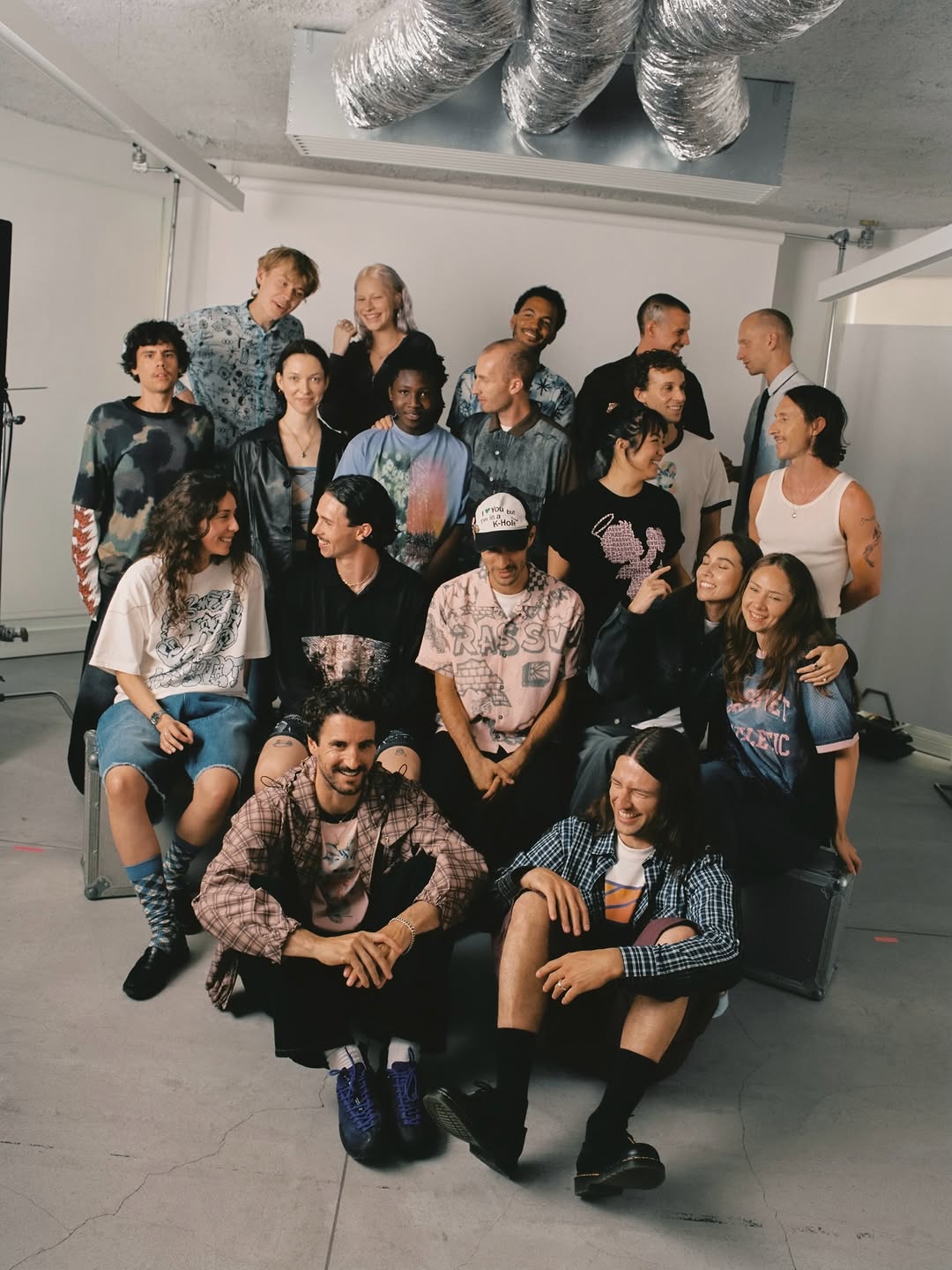
Has skateboarding ever been constraining to you as a creative director?
I don’t know, it’s cool to break the rules of skateboarding. I’ve never purposefully pissed people off, I just want to look and do different. I’m going in my own direction. What’s the point of the brand if we’re doing the same thing as everyone else? It would just be fast fashion, like “here’s another trend”. I don’t think any brand should operate like that.
For me, if you make clothing, you’re creating a personal vision according to what the world needs. I think it’s good to be misunderstood and beneficial that we aren’t stuck in a box. We don’t need approval from skateboarding to dictate what we’re able to make.
Do you think skate brands take enough risk?
There are so many companies that are just doing t-shirts, hoodies, and boards. That’s great if it’s the road they want to take. For me it’s never been the case, I’m not interested in just making t-shirts.
Will skateboarding always be an integral part of Rassvet?
It’s a pillar of the brand that can’t be taken away. It will always be there and continues to introduce us to different things. Even now, one of the big events that skaters are going to is Paris Fashion Week. It’s a really cool time for skateboarders to be skateboarders, and we’re being mixed in with these other scenes.
In any industry, what’s valued most is multifaceted individuals. People that are directors can also be painters, musicians, designers, and skaters all at the same time. Everyone has multiple things they do and depend on, and it’s totally fine to be interested in and pursuing many different outlets. At this point I think it’s smart for brands to operate in a similar manner and occupy many spaces.
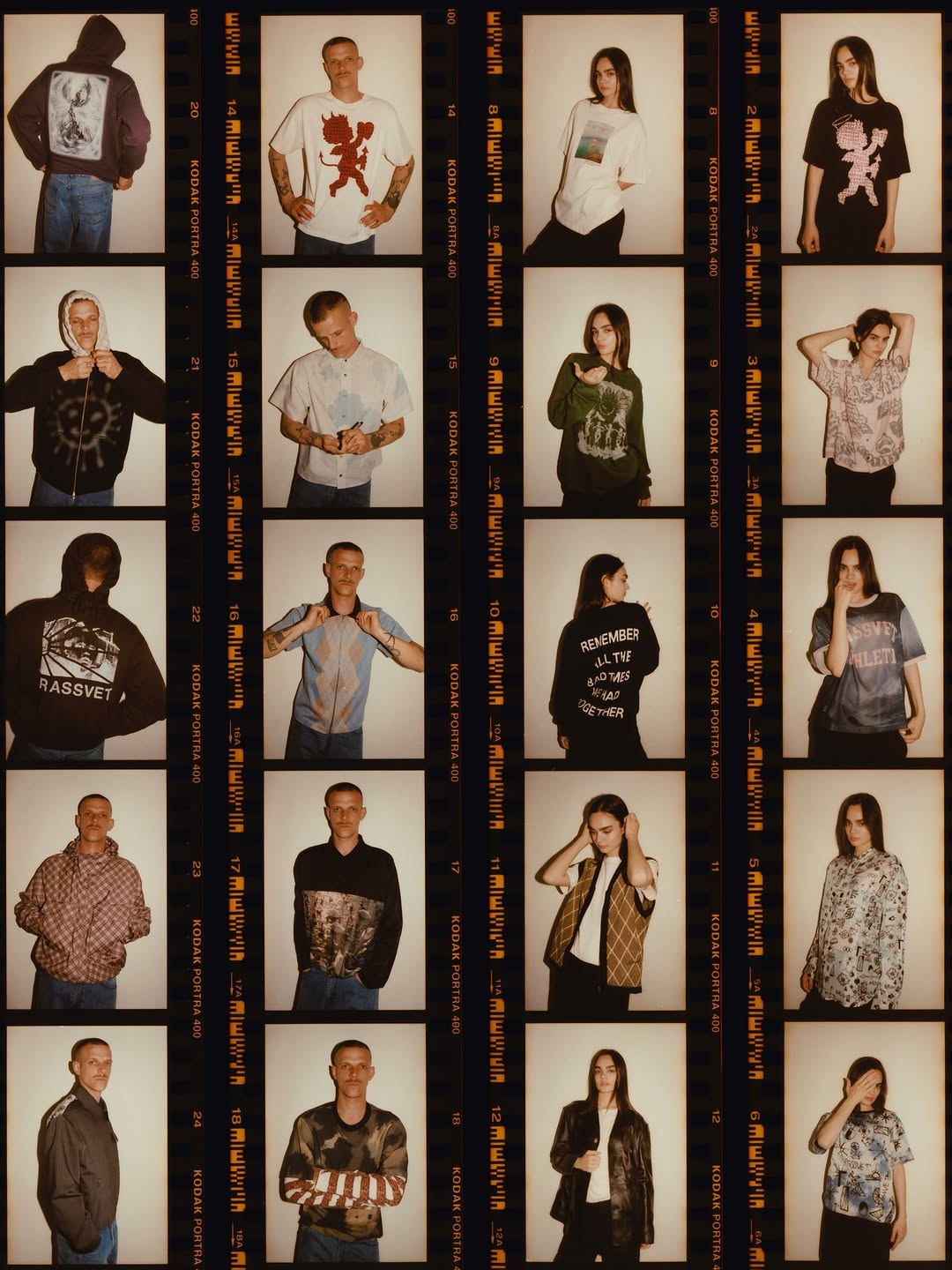
You mention Paris Fashion Week, which to me that’s a new thing for skateboarding to be involved with. Once these crossovers started to happen, do you think people understood Rassvet better?
Definitely. Rassvet isn’t the brand doing catwalks, but if we want to showcase our clothing differently we’re going to. It’s the freedom of creating something, you can’t be afraid of your own ideas. Don’t be scared to make what you think is rad, even if it’s a gamble. I think as lines blur and subcultures collide what we’ve been doing has strangely become more digestible for people.
“Fashion and skateboarding are very free art forms, they feed each other.”
What would you say to someone who thinks skateboarding has no business in high fashion?
That we just don’t share the same perspective on it. I can understand their point of view, but attempting to explain to someone that narrow-minded is useless. Everything serves a purpose, it’s just deciding how you want to see it, and understanding what you want from it.
What’s something you’ve learned from the fashion world that skateboarding can learn from?
That’s a difficult question. For me, fashion and skateboarding are very free art forms, they feed each other. I think if we can learn anything from either of them it’s simply not being afraid to take risks.

The price point of Rassvet puts you in a different place than most other brands in skateboarding. Has that changed the way people look at Rassvet?
Our cut and sew is definitely more expensive than most skate brands, but our basics, accessories, and boards are still pretty accessible. All things considered, we make a majority of our garments in Europe. With these elevated production and quality standards comes a higher price.
As you moved to this higher price point, were you worried about losing the skate fanbase you had created?
People can think what they want, of course I would love to be able to offer the most accessible prices but we just can’t afford that. Even now, we’re on the edge with the way we operate wholesale pricing. We’re providing what is sustainable for us right now, and actively taking approaches to make things more affordable.
“We’re constantly weighing what the world actually wants, and how we can feel creatively fulfilled.”
Are your personal changes in style reflected in what Rassvet produces?
I don’t always think people should wear what I wear, and it often times doesn’t make for an interesting collection. I’m never designing anything that I wouldn’t wear myself, but it’s gotten far more intentional over the last few years. We’re constantly weighing what the world actually wants, and how we can feel creatively fulfilled.
Sometimes we spend three weeks working on a mood board before we even figure out what direction we’re going. Today I went to a bunch of second hand stores just looking for inspiration and references for the new line.
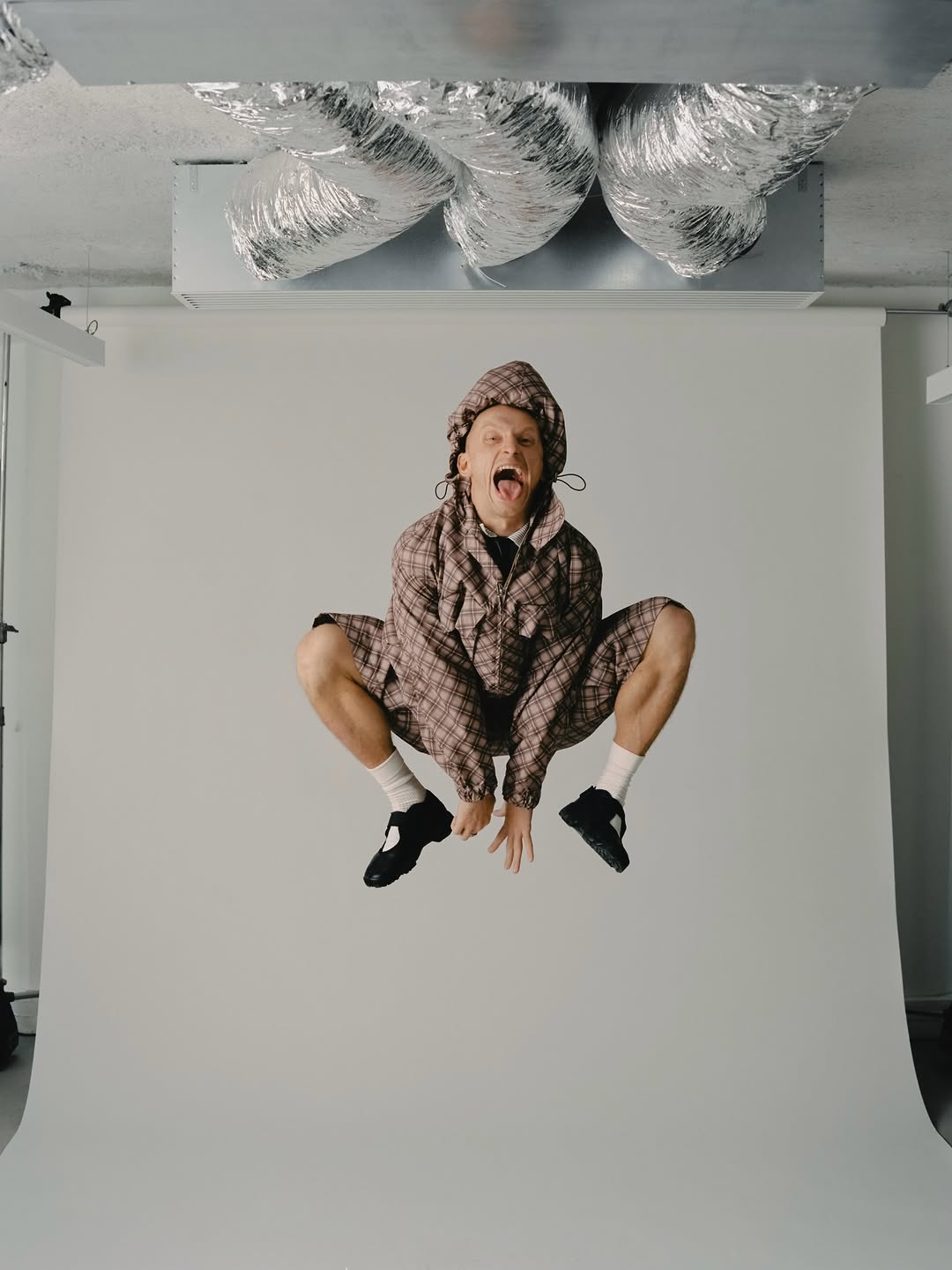
At its core, Rassvet is a Russian skateboard brand. Do you still feel like it’s important to represent Russian skateboarding?
The company’s name is in Russian, and I can’t change where I’m from. We’ve never operated from Russia, we’ve always been based in France, though people still associate us with the war happening. There are only a few people from Russia working for the company, and we all live by very different ideologies than the Russian government. A majority of Russian citizens stand for something very different than the government in Russia.
It’s a tricky topic, I hope I’m clear on the fact that I do not support the Russian regime, because I’m quite the opposite. But I don’t want to be scared and feel like I need to change the brand’s identity, or the name. It’s beautiful. The meaning of the word is dawn or sunrise, and represents positivity through change, a hope for a better future. For me that was always important, it still is important, it wouldn’t be Rassvet without it.
Do you feel like you had to distance yourself from your background?
It was really difficult. The first few months when I arrived in Europe, I was scared to even speak Russian in public. I felt categorized, I didn’t want to be treated differently based solely on the country I was from, the country I was actively fleeing.
“If it doesn’t work there are two-hundred other things that I’m interested in trying.”
You’ve been around for ten years, not a lot of brands can say the same. Did you expect this project to last for so long?
Not really [laughs]. When you talk about ten years it doesn’t even translate to me, it just feels like my life. When I start something I don’t think about how long it’s going to last, I just do what I want to do, and if it doesn’t work there are two-hundred other things that I’m interested in trying.
Not running a skateboard company later on is going to be fine with me, but there is still so much to say and create with Rassvet right now, I feel like it’s necessary to keep going. There will be a day when we have to decide the next steps, but I’m not dwelling on that, I’m thinking about the next six months.
What do you see as one of the biggest mistakes other brands make that leads to their demise?
Not engaging with their audience correctly. You shouldn’t start a brand just to start one, you need a clear understanding of why you’re creating. Rassvet has always been a tool for me to communicate ideas with people, through a visual language. Whether what you’re doing resonates with people or not, that’s kind of like natural selection.
Of all the things you’ve created, do you see any one specific piece as being timeless?
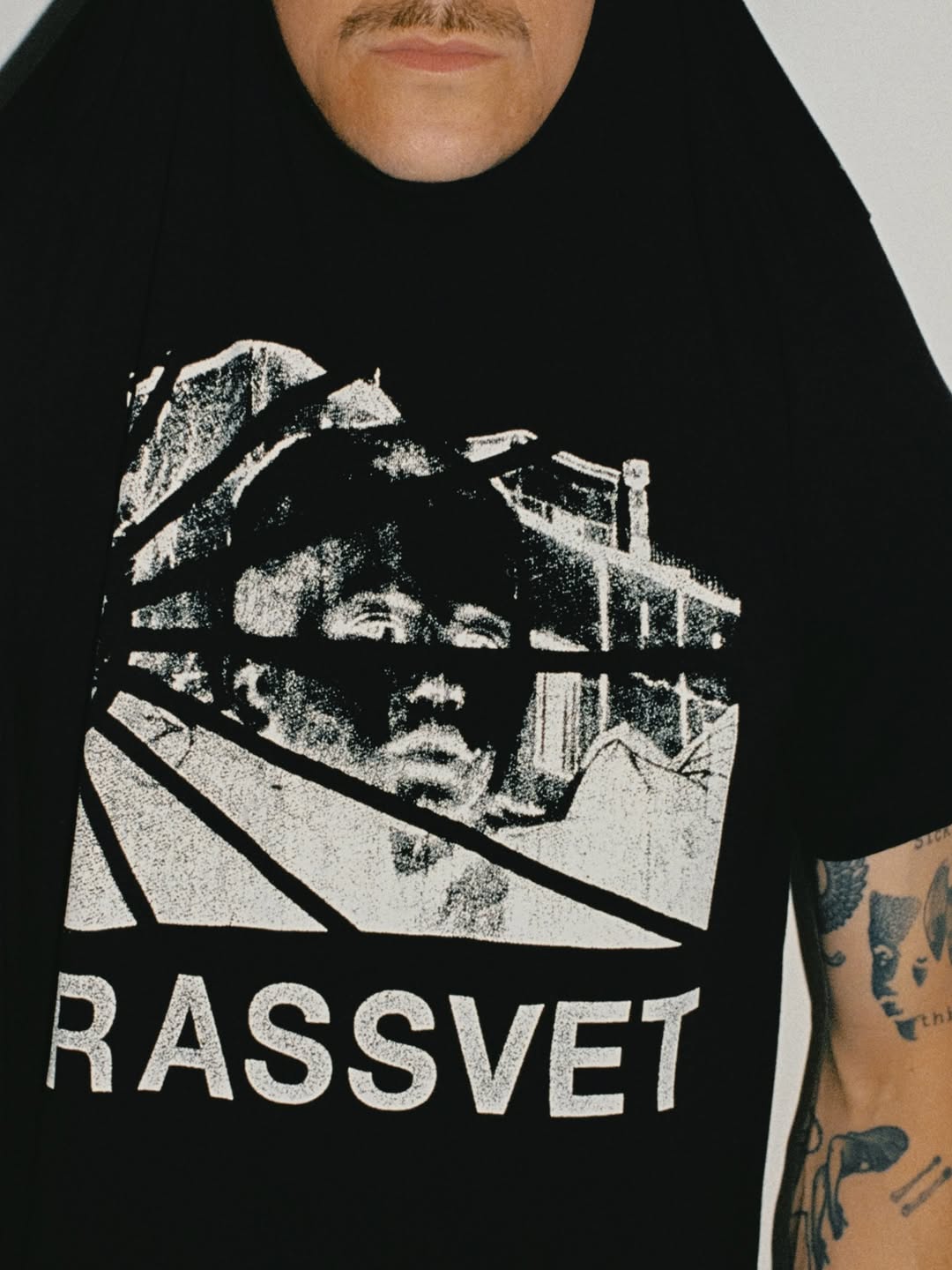
That doesn’t exist. I think if you ask that question to anyone they’ll tell you nothing is absolutely perfect, we end up seeing the flaws later on. But I’m proud of everything. One of the t-shirts that we brought back for the ten-year collection is an image of a boy looking out through our logo, which is one of the first graphics I created for the brand, when I wanted to get out and explore the world.
In celebration of ten years of Rassvet, can you give me ten tips for running a successful brand?
I don’t think I need to give any advice at all. I‘d just say to do what you love and follow it through to the end. Find the strength within yourself to keep going. If you really love something, just keep doing it. A lot of the work along the way won’t be pleasant, so get ready for it [laughs].
The Shop


Related Posts
-
 AN INTERVIEW WITH MIKE SINCLAIR, SKATEBOARDING’S MOST FAMOUS TEAM MANAGER
We spoke to the man responsible for keeping your favorite pro skaters' careers on track.
-
 A NEW TRUCK BRAND, IN THIS ECONOMY?
We talked to skateboarding's favorite team manager, Mike Sinclair, about his new truck
companyexperiment. -
 A CHAT WITH LUDVIG HAKANSSON, THE OLDEST SOUL IN SKATEBOARDING
The man loves to read Nietzche, skates in some expensive vintage gear, and paints in his own neoclassical-meets-abstract-expressionist style.
-
 CAN SKATEBOARDING HELP PEOPLE DEAL WITH TRAUMA?
Meet Joel Pippus, a counselor who is exploring if skateboarding can effectively help children heal from trauma.
-
 TAP IN TO THE SOUTH OF FRANCE WITH THIS CREW OF UP AND COMING SKATERS
Untapped French spots, a hefty stair count and a sweet reminder to let your homies know you love them.
-
 ATTEMPTING THE PROUST QUESTIONNAIRE WITH ALEXIS LACROIX
The man of “Oh Yeah” and Dime fame takes on a historic set of questions that is said to reveal a person’s true character.
-
 AN INTERVIEW WITH THE KID WHO FILMS SKATING ON HIS LAPTOP
Sheer necessity and resourcefulness are powerful driving forces in creativity and that's where Derek, the laptop filmer, comes in.
-
 NERDING OUT WITH THREE RARE DECK COLLECTORS
If you ever wanted to reclaim a piece of your childhood and cop that one deck you saw in a CCS catalog, hopefully, this will be a solid place to start.
Comments
Popular
-
 KEITH HUFNAGEL ON THE FUTURE OF HUF
We heard a rumor that HUF was going out of business, so we talked with boss man himself to find out.
-
 AFTER MANY YEARS IN SKATE SHOE PURGATORY, DVS IS BACK. SHOULD YOU CARE?
A conversation with Lee Berman, a skater who spent over a decade building Converse CONS, about reinventing DVS Shoes.
-
 THE HISTORY OF SKATEBOARDING’S MOST TABOO TRICK: THE BENIHANA
If you’ve ever wondered how far back the anti-benihana sentiment stems, you’re not alone.
-
 PARADE WORLD IS RETHINKING THE WAY YOU BUY SKATE GOODS ONLINE
Now you can buy skate goods online and support a local shop at the same time.
-
 GETTING KINKY WITH DANIEL VARGAS
Daniel Vargas' philosophy on whips, chains and getting choked out.
June 3, 2026 12:26 am
R.I.P Marc Johnson
June 3, 2026 12:27 am
You think anyone gives a shit about this right now? Don’t be a coward and talk about MJ
June 3, 2026 12:29 am
Cory Kennedy killed P.Stone
Ali boulala killed Shane cross
Mike Carroll killed Marc Johnson
June 3, 2026 12:31 am
Nobody cares