
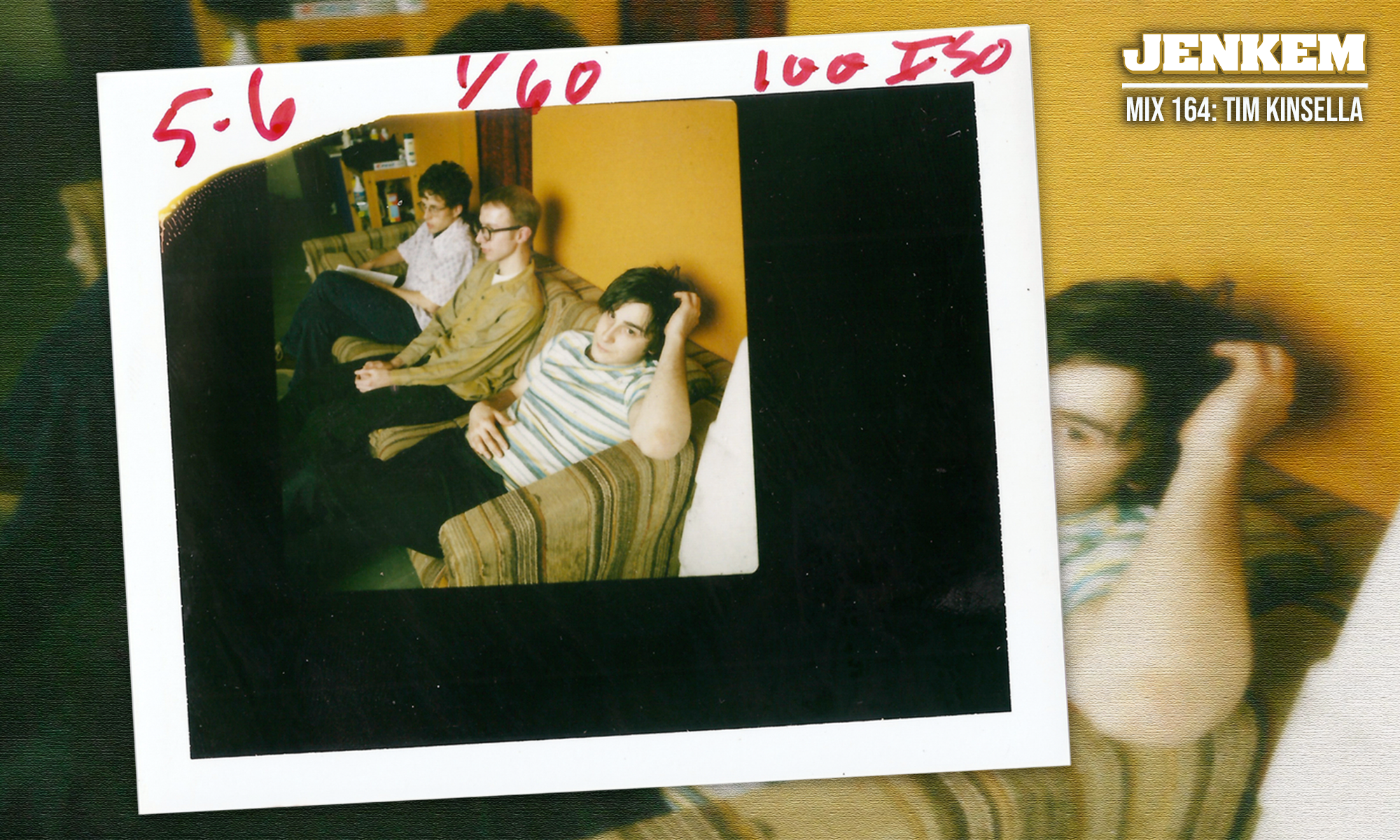
In the same way that pants go from baggy to skinny, music trends move in a cyclical motion. And recently, second wave emo, aka “Midwest Emo,” seems to be making a comeback.
From cult bands going on reunion tours to young bands turning heads, the genre that can feel like a time capsule into the early 90s is reinventing itself once again. But where’d it start?
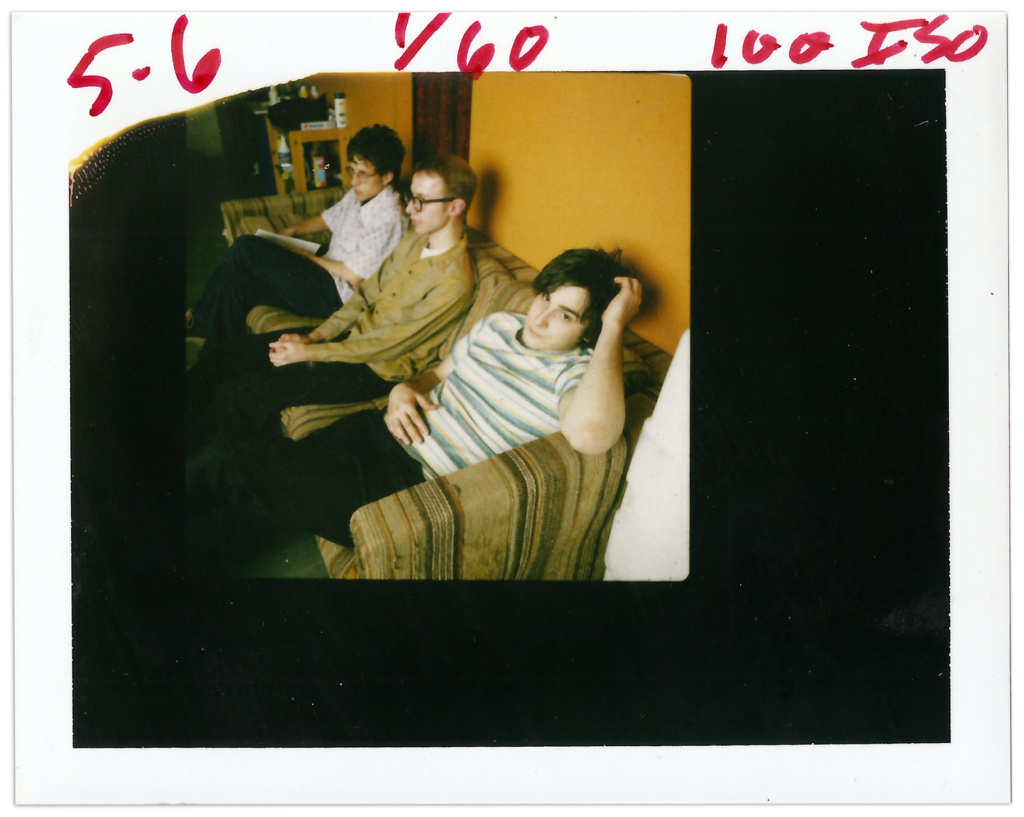
For that, many look towards Tim Kinsella, co-founder of Cap’n Jazz, a band whose first and only album, Shmap’n Shmazz, is often credited as sparking the entire second wave sound.
While six short paragraphs couldn’t possibly do Tim Kinsella justice, Noisy did a good job telling his story in their sweeping 2017 documentary, Your War (I’m One Of You): 20 Years Of Joan Of Arc.
For Jenkem Mix 164, Tim selected a mix of songs that made a deep impact on his career, as well as music from his latest project, Kinsella and Pulse, LLC.
Throw it on, and while you listen read through our short interview with Tim about sustaining creative projects, knowing when to quit, the Midwest Emo revival, and more. As always, download HERE or forever hold your peace.

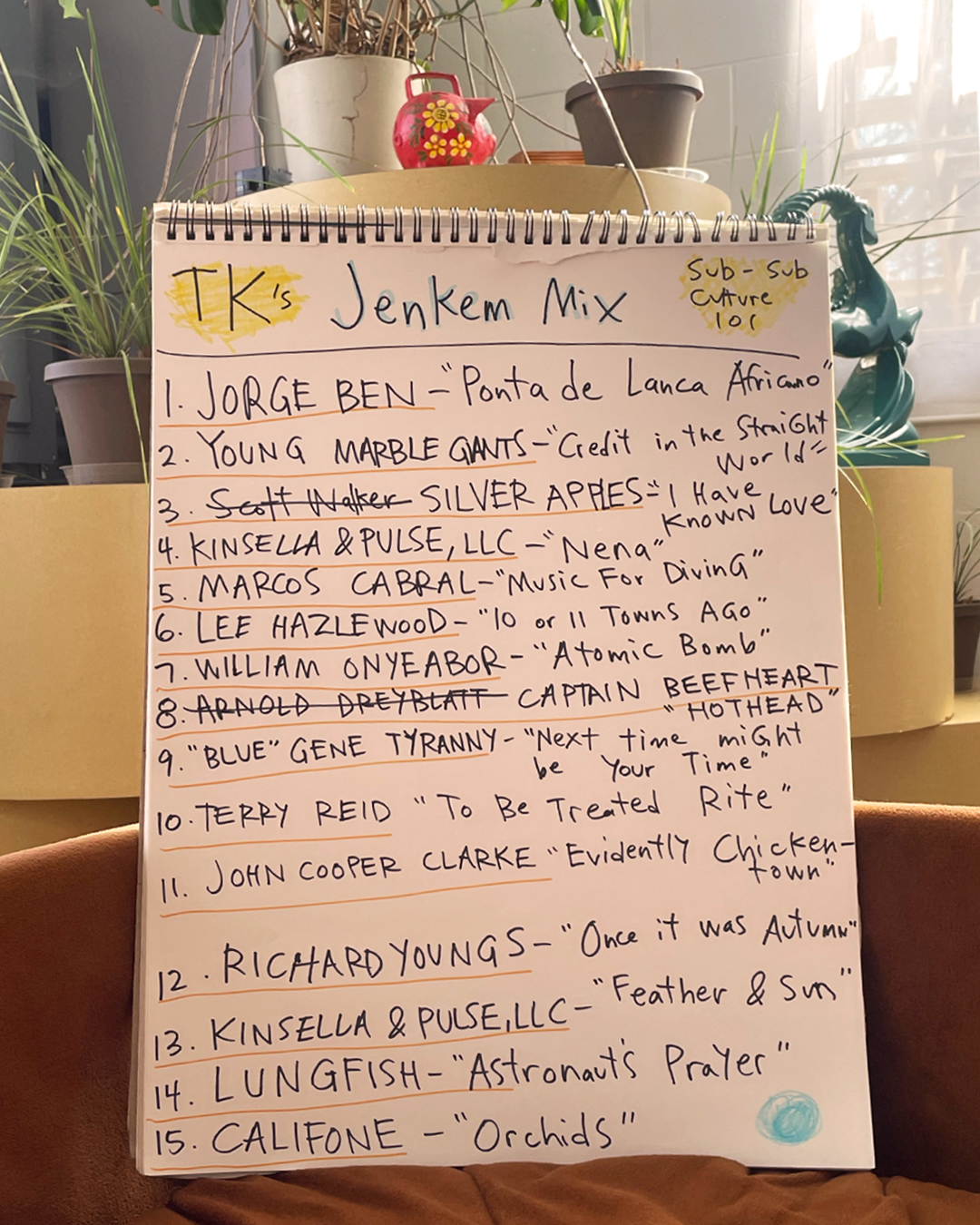

You titled the mix sub sub culture 101, what does that mean to you?
When you’re first introduced to subculture there are things you get into first, like the Violent Femmes or the Misfits, those bands that help you discover that there is other music than just popular music. And then if you stick with it and continue to listen you hear that there are other modes of rebellion. So I picked songs that made a big imprint on me, not necessarily as a teenager when I was first being introduced to subculture, but later on. This is the underground of the underground.
Because it’s so easy to hop into the depths of a subculture these days online, do you think it’s easier or harder to find a subculture you relate to compared to when you were growing up?
When I was growing up, your musical tastes were really tribal. I remember seeing Jello Biafra do a spoken word thing when I was 13, and he made a joke that no gym teacher could get someone to conform as well as heavy metal fans conform with their style, which was very true in the late 80s. So there was this tribal thing, and it especially meant a lot for punks. If you were traveling and you saw someone with a Misfits t-shirt or with an Exploited patch, you’d be like, “Oh, this guy knows the same secret knowledge I do.”
You couldn’t know what something like Os Mutantes sounded like unless you had the record, or your friend had it. You couldn’t Google it. So there’s a different level of commitment. And there’s something beautiful about the mystery of it, when you’re a kid and you see a Dead Kennedy’s logo, you’d wonder, “Oh, what’s that sound like.” There’s something really utopian and magical about how everyone has so much access now, but it’s also a little dystopian how that constant access jams things up and solidifies the dominant powers of conformity.
As I get older I skateboard less, and I often wonder if I actively have to be skateboarding to appreciate skateboarding, so I wanted to pose that question to you. Do you have to be actively playing music to appreciate it?
I’m 51, and maybe even when I was 35 what I’m about to say would have sounded pretentious to me, but I absolutely believe I’m first and foremost an obsessive music fan before I am a guy who makes music. But yeah, when you’re young and you’re starting something you not only have the energy but you’re learning, so it takes much more time to make the mistakes. Later on you don’t have to make those mistakes, so I don’t sit around and practice my scales, they are in my hands, I don’t need to put the hours into that anymore. You know how to execute your ideas better, so if I want to play a melody line I know how to achieve that. I don’t have to struggle. But yeah, I play music most days, and sometimes I still wonder why I don’t spend as much time playing music as I used to.
Would you be surprised to know that some of your earlier projects, like Joan of Arc and Cap’n Jazz, have been used a lot in skate videos?
That’s amazing. When Cap’n Jazz was happening, all our friends were skateboarders. All we did was hang out in big groups and skate. So that sensibility gets transferred somehow, maybe in a way that none of us could recognize or verbalize at the time, but that creative energy was there. And by the time Joan of Arc started I was 21, so less active as a skateboarder, but it’s still the same worldview.
Are there any skate videos that influenced you early on growing up?
The H-Street video, Hokus Pokus comes to mind immediately. And we actually used to cover two songs in Cap’n Jazz from skate videos, one was “Alone” by The Cry, and we didn’t even know the band name or the name of the song but we all just watched the video so much. And then Cap’n Jazz covered a song that we just referred to as H-Street because we didn’t even know what the song was.
Woah, I didn’t know the Cry was in the H-Street video. I know that song “Alone” from a video that came out in 2016.
So that’s someone pointing back to the H-Street video. I remember someone had “Hensley is my mentor.” written big on their board growing up. And then you mentioned a first board, I think mine was a Steve Caballero, this giant boat. And I didn’t have any money as a kid, so I’d ride this board until they looked like a piece of wood from a dock that had been flooded [laughs].
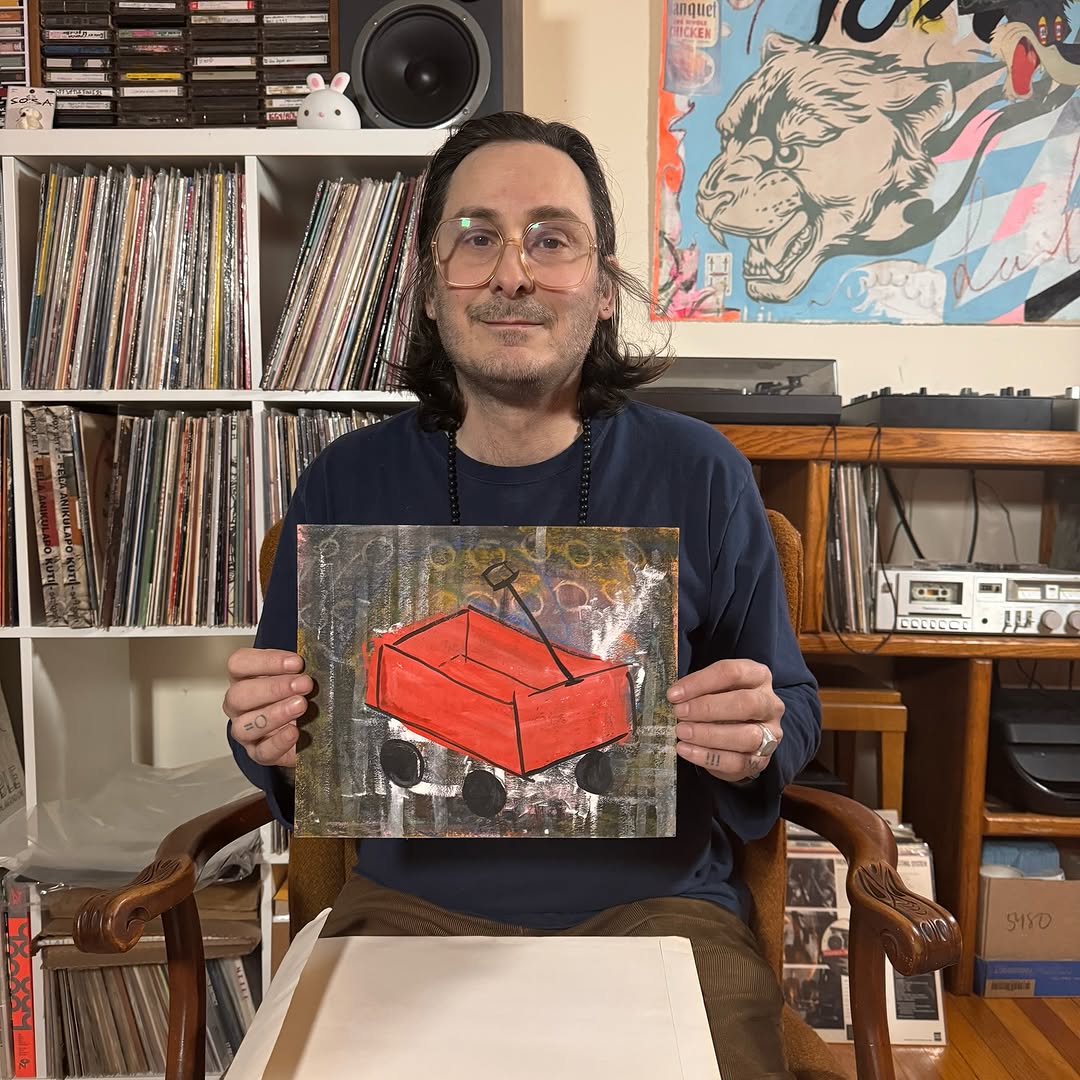
There’s this generation of punks that came out of the late 80s with this anti-establishment music, and I feel like it should be happening again right now, but it’s not. Do you think there’s a reason for that?
You know, this is something I talk about with my friends a lot, like, “Where is the underground?” and at least in Chicago, there’s a lot of gnarly techno parties that feel to me how the punk shows felt as a kid. And you know, in the late 80s and early 90s the most portable musical device was a guitar. Now what’s portable is a sampler, laptop, drum machine, so this same energy of counterculture and rebellion is always there, it just changes. Nothing against Warped Tour or whatever, but that’s not the underground. That’s a commodified version of rebellion, so people can feel like, “Oh, we’re being rebellious.” So I have 100% faith that these scenes still exist, and I probably know more about them than most people my age, but I’m also not tapped into them the same way a 22 year old is.
I really liked something you said about how creative people are scared to get an uncreative job. How did you come to this conclusion of, “I just want a job that pays the bills and do my creative stuff on the side?”
Honestly, I bartended for a really long time and it got too physically hard. My whole next day would be ruined. So I went back to school and got a degree so I could teach, and then I was a teacher for a decade. But I realized that I was using the energy I needed for my own creative work while teaching, and that I was able to concentrate less on my own creative endeavors because all that energy was going into teaching. So I was like, what I really need is to be a handyman or something, because with that you get the money and don’t have to invest any creative energy into that.
Did that work for you?
Totally, and it makes me focused when I do have the time to work on my own stuff. I’m more appreciative of it, and I can’t put it off, because I know I have to go and be like a landscaper that day.
We see a lot of these once popular skate brands become shells of themselves because they don’t know when to quit, and as someone who’s started and completed different projects, how do you know when a project has run its course?
I think when it becomes a caricature of itself, you know? Joan of Arc was a band for 22 years, but it changed a lot. And that’s how we kept it fresh for us. But at the time, a lot of people were like, “Oh my gosh, Joan of Arc is still a band?”
You have to weigh the cost benefit ratio of, “This is who I am, this is what makes me happy.” I need to make music to make me happy, but I don’t necessarily have to share it all, like the music I release is probably 10% of the music I make. People get into bad situations when they need the appreciation of the audience too much. That need to be liked is pretty embarrassing.
I heard you speak about this feeling of being at the peak of your ability musically, but the trough of your audience. And sometimes I see this with skaters who have this insane ability, but people don’t necessarily care. Do you think fulfilling your creative needs to push yourself is more important than creating music that people like?
That’s a hard one. When I was 25 I had 1,000 friends and every single one was in a band, and then you get a job that doesn’t leave you enough energy, or you have a kid. You know, I just finished a new solo record, and I sent it to 4 or 5 labels run by people I like and know, and I can’t get anyone interested in doing the project. It’s not easy when you’re not willing to take short cuts.
I don’t know if you’re attuned to this midwest emo sound revival, like Algernon Cadwallader releasing new music or American Football getting a Vans collab. Why do you think that’s happening?
The world is fucking scary and depressing, you know? Masked men kidnapping people off the street, environmental devastation, it’s a scary time, so I can’t blame anyone for being nostalgic for the 90s and the feeling of, “anything is possible.” People are sick of current reality, so it’s an easy time to get nostalgic.
Do you find yourself nostalgic? Because from your creative output it doesn’t seem as such?
Well, when I was younger I got really into a lot of pretty radical revolutionary politics, and that sort of informed my world views, and I think when I was younger I was a bit of a hard ass. I saw nostalgia as counter revolutionary, you know? But I’m still subject to it. When I see a friendly dog I don’t want to just wrestle that specific dog, I want to feel like I’m wrestling all the dogs in my life that I’ve enjoyed wrestling with. So I still get nostalgic, obviously, but that doesn’t have much of a place in my creative processes.
Of the music you included in your mix, is there one that you’re particularly excited for people to hear?
Scott Walker and Arnold Dreyblatt made the first draft of the list, and I scratched them out but still wanted to include them so people still look them up. Those are both huge influences on me for many years. Young Marble Giants I’ve returned to over many years, “10 or 11 Towns Ago” by Lee Hazlewood my wife Jenny has [the lyrics] printed out in her studio, and it’s the smartest and funniest song lyrically.
The Shop


Related Posts
-
 JENKEM MIX 118: SAVANNAH STACEY KEENAN
For full rave ambience we suggest listening at max volume and aggressively flicking the lights on and off until your landlord yells at you.
-
 JENKEM MIX 132: UNA FARRAR
Una brings that bitch I do what I want energy front and center, and damn does it feel good.
-
 JENKEM MIX 113: HUGO BOSERUP
It's weird to think that Hugo's newborn kid will think some of these tracks are "dad music" in the future.
-
 JENKEM MIX 115: NELLY MORVILLE
The Limosine young gun hits us with a list of post-hardcore and emo tracks for you to jack for your next homie video.
-
 JENKEM MIX 124: MARCO HERNANDEZ
If you're a bartender, Marco's got you covered with a crowd-pleasing mix for your weekend shift.
-
 WE TALKED WITH 6 MUSICIANS ABOUT SKATING ON TOUR
Topics covered include: international spot searching, problematic injuries, and building relationships in a parking lot at 2 a.m.
-
 JENKEM MIX 154: SEAN PABLO
If you're at the bar and Pablo is on the jukebox, know you're probably good.
-
 JENKEM MIX 126: ANTONIO DURAO
Much like Antonio himself, this one’s got it all… An auditory gumbo, if you will.
Comments
Popular
-
 KEITH HUFNAGEL ON THE FUTURE OF HUF
We heard a rumor that HUF was going out of business, so we talked with boss man himself to find out.
-
 AFTER MANY YEARS IN SKATE SHOE PURGATORY, DVS IS BACK. SHOULD YOU CARE?
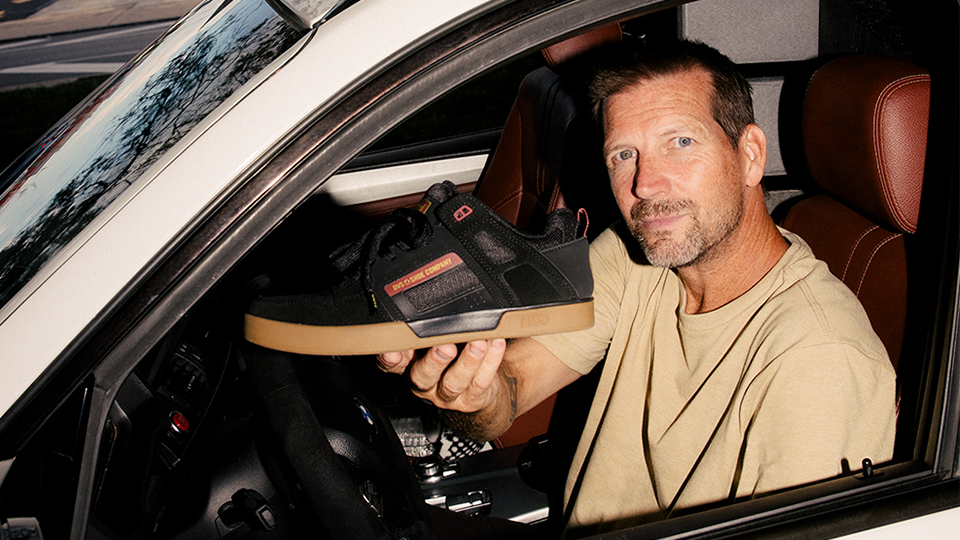
A conversation with Lee Berman, a skater who spent over a decade building Converse CONS, about reinventing DVS Shoes.
-
 PARADE WORLD IS RETHINKING THE WAY YOU BUY SKATE GOODS ONLINE
Now you can buy skate goods online and support a local shop at the same time.
-
 GETTING KINKY WITH DANIEL VARGAS
Daniel Vargas' philosophy on whips, chains and getting choked out.
-
 THE HISTORY OF SKATEBOARDING’S MOST TABOO TRICK: THE BENIHANA
If you’ve ever wondered how far back the anti-benihana sentiment stems, you’re not alone.
April 21, 2026 9:33 pm
Hell ya, always used to listen to Cap’n Jazz while I skated in 2007/2008
May 12, 2026 4:07 am
introduced to “subculture” 🤔
bizarre way to articulate it