
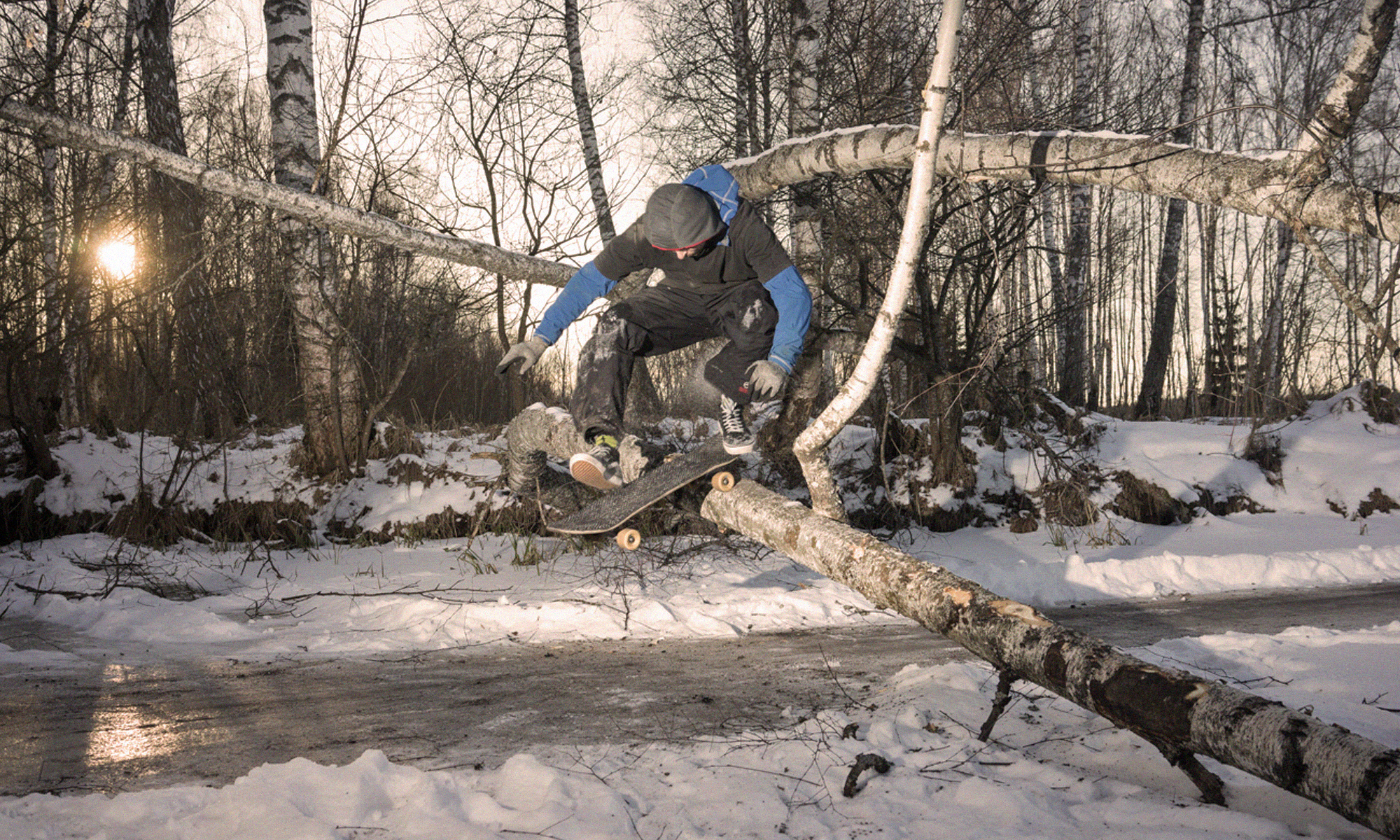
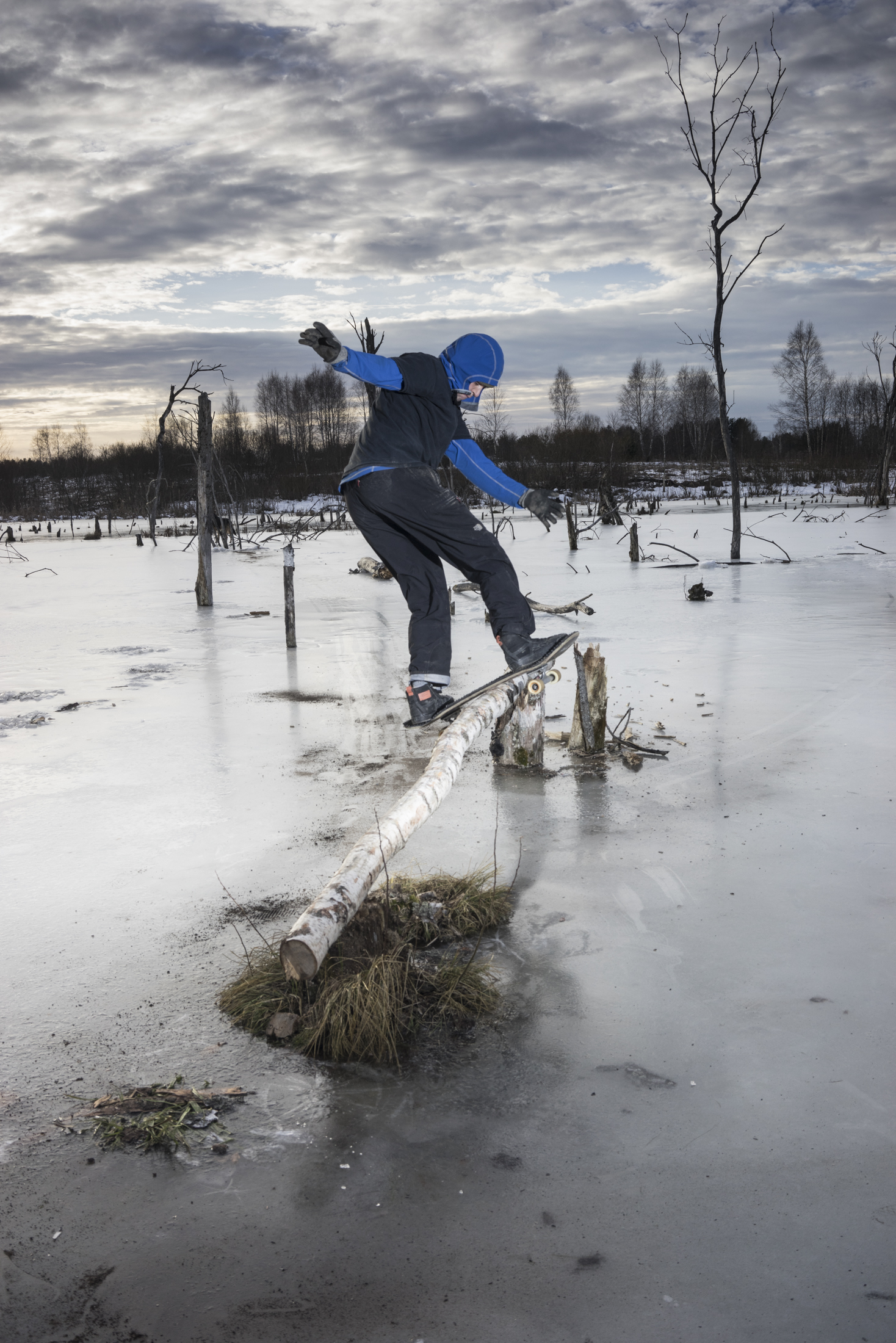
Two hours outside of Moscow, Russia, skateboarder Ilya Batrakov hikes along the frozen Iskona River looking for remote skate spots: natural ice ledges, fallen trees, and defrosted gaps.
For Ilya, it’s a skatepark only he sees, and he’s spent years not only documenting the changing river through breathtaking photography but stacking clips as well.
Recently, his efforts culminated in “Morok,” a 12-minute arthouse video by Ilya and friend Petr Barabaka highlighting the past three years of skateboarding the frozen river.
Filmed in bone-chilling temperatures, the video is at times morose, at times inspiring, and overall singular in its approach to skateboarding.
Craving more details, we phoned Ilya to talk about the creation of the video, what it’s like living in such a rural area, and how he deals with the frigid cold.

Q&A WITH ILYA BATRAKOV
What is the significance of the Iskona River to you?
Since I turned five years old, I’ve been by this river. I learned to swim, learned how to fish, all in this river. Basically, as long as I can remember, this river has been nearby.
How rural is the surrounding area?
This area is two hours outside of Moscow. The nearest small city is around 20 kilometers away. It is quite populated on Summer days because many people from Moscow and other cities have summer houses, but in winter very few people stay here full-time. It’s forested around my village, and you can still see wild animals and birds. It’s full on countryside.
Living there, how’d you find skateboarding?
I started skating when I was around 13 years old. My parents took me to Moscow and we ended up in a skate shop. The name of the skateshop was Ne Olimpiyskiye Igry (Non Olympic Games). It was very important for Moscow skateboarding. I remember watching Modus Operandi and seeing Mark Johnson skate.
Soon after that I remember watching Zero’s Misled Youth. After I earned enough money to get a skateboard I found an abandoned concrete panel, about three by two meters big, and I started practicing. But to achieve real progress I had to go to Moscow.
Where did this idea to document your skateboarding on the river come from?
Around 2011 I started taking a lot of hikes up and down the river during winter, sometimes up to 50 kilometers up and down. And I started noticing that the shape of the ice would sometimes be the perfect obstacle for skateboarding. For a while I was just looking, but at one point the conditions came together: the negative temperature, the condition of the ice, the water, and I decided to give it a try. Back then I would just do very basic things like push around, maybe do a little drop in, but soon I started thinking about my setup, the griptape, wheels, and it started progressing from there.
How do you get used to skateboarding in such an extreme climate?
It’s a battle every time. It’s almost like Mission Impossible. But I like that it’s a battle with myself. I compete with myself, and over time I’ve gotten used to it.
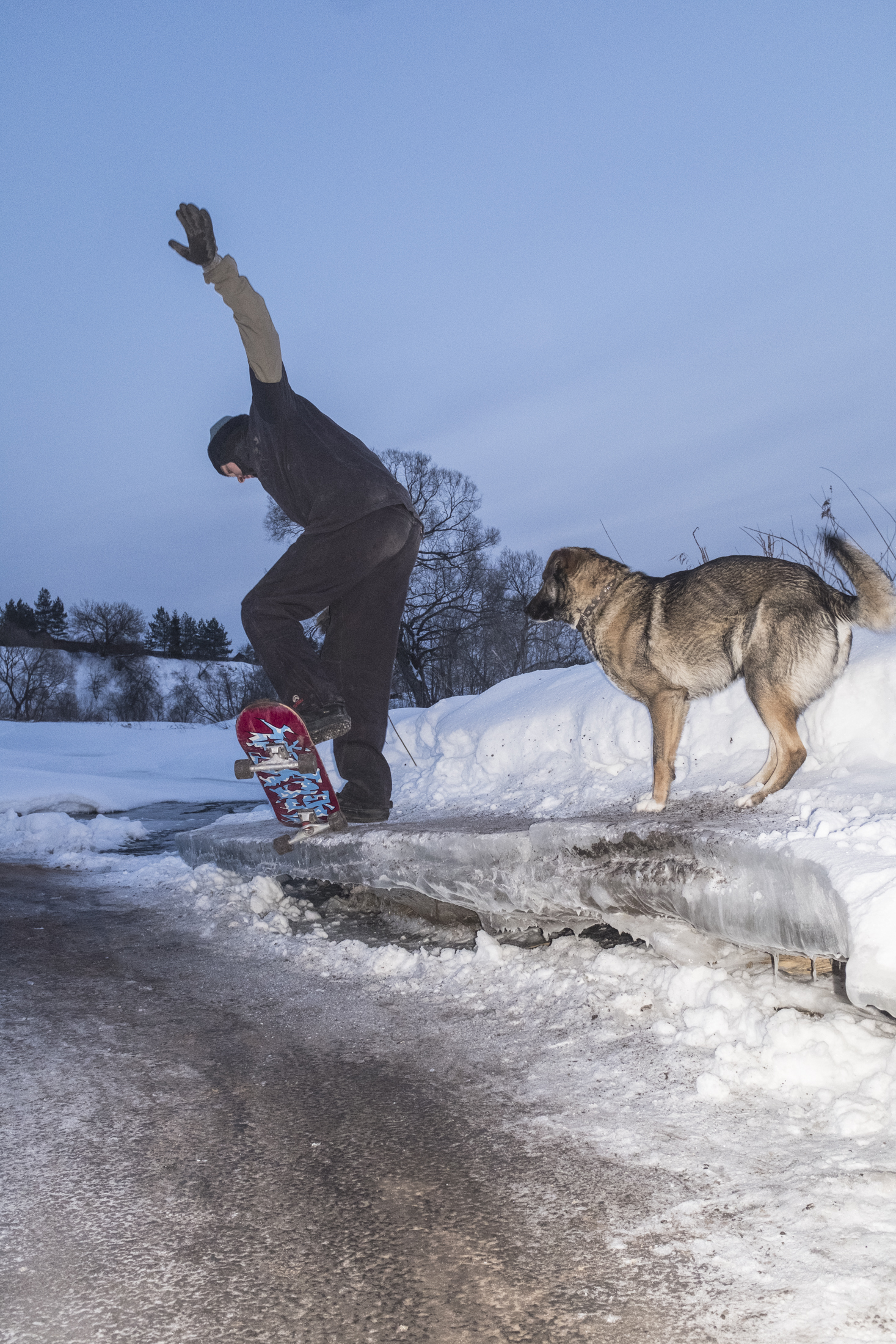
There is a special thing about this type of skateboarding. Some of these spots exist only as long as two or three days. Depending on the weather conditions, sometimes spots can break with your own body from a slam. With a normal spot you can go back, find a better moment, wait for better conditions, but here something is going to be different if you wait. The water level might be different or the structure will change. Everything only exists for a very limited period of time.
What can you do to make a spot easier to skate?
Almost all of them need to be cleaned up, but that’s the easy part. Sometimes I shape them with a chainsaw, and sometimes I use water. You can spill water on the runup, and it gets frozen and becomes ice. You can also use ash from a fireplace for better grip.
Why don’t you just try snowboarding instead of going through all this trouble?
For snowboarding you need real mountains, and we don’t really have mountains around Moscow. I’ve snow skated a little bit, but it’s not as interesting as normal skateboarding.
Are there any aspects of the river that makes it good for skateboarding?
I like the feeling of skating alone, being out there in nature by myself. It’s like a getaway from all the negative thoughts and all the bad things going on around me. Also, skating like this helped me overcome my negative attitude about winter. Before this I was never a winter guy, I didn’t like cold temperatures or water, and this project made me overcome those attitudes. Now I feel better in the wintertime, and it’s way more tolerable.
As an American, I feel like we view Russians as rugged, strong-willed outdoorsmen, especially in the cold. Does that ring true to you?
That’s kind of a stereotype actually. Russian houses are built well, and during wintertime our houses are warm, sometimes hot even. Also, Russian people are prepared, we’re not cold and frozen. When I was in Dusseldorf, Germany I felt like the houses there were very cold. I think they are just less prepared for this type of weather compared to Russian houses.
Have you ever been in a scary situation where you needed help out on the river?
The craziest thing is falling through the ice. It happened twice. One time it was negative 28 degrees celsius. That’s super cold. I was doing a spot check that was really far away. I took a bus, and then took a half day hike to get there. When I fell through I did some quick analyses about what I should do, and I came to the conclusion that it was safer to try and start a fire and dry up before trying to get home. Luckily I was able to start a fire and I semi-burned my clothes and dried them.
Are there any tricks that are easier on ice?
Power slides are easier. The ice is very smooth. It feels like you’re rolling on a perfect marble floor. Also, a little payback is that it isn’t as painful when you slam on ice. Your body slides.
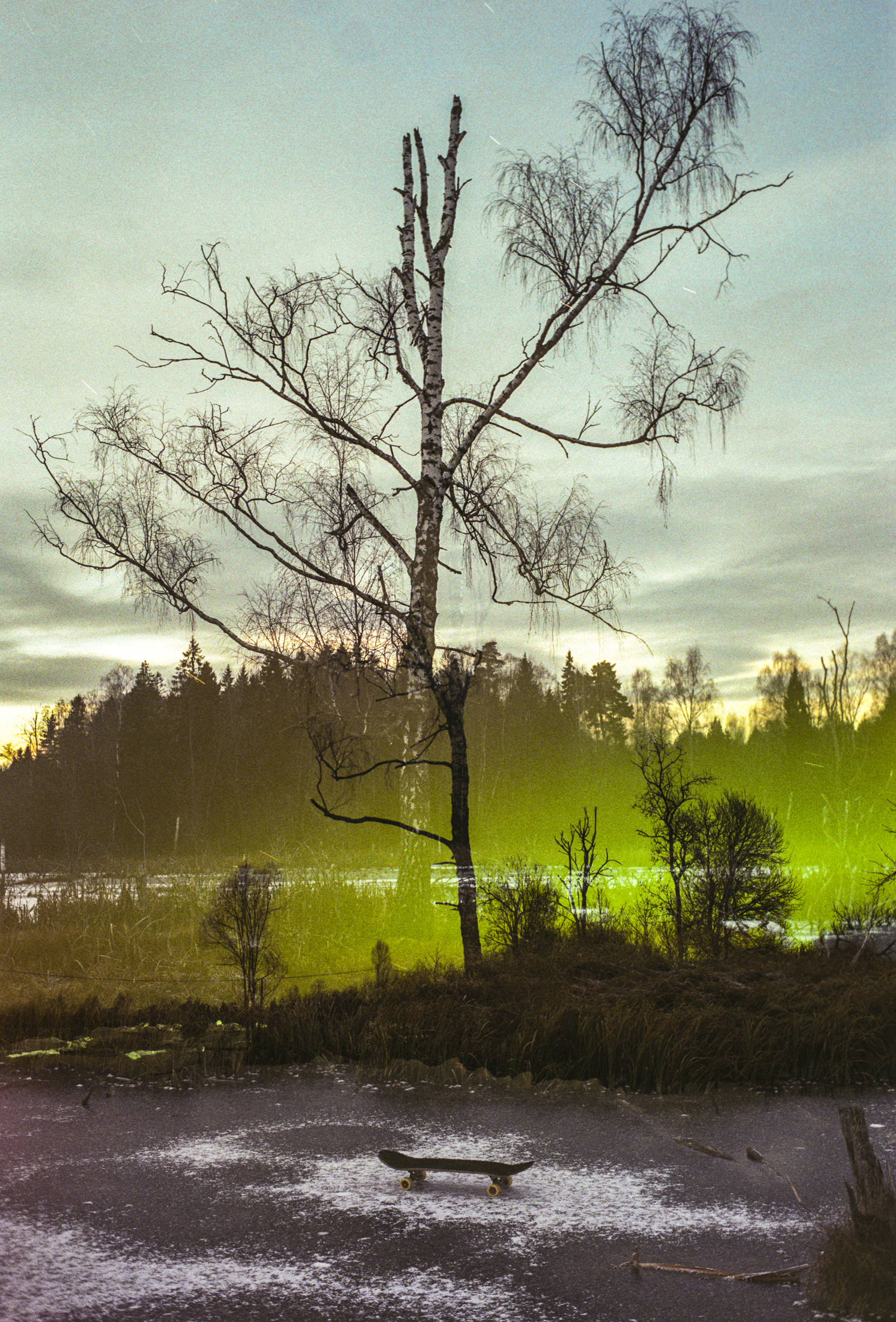
The photos you took of the river are beautiful. Aside from skating the river, how long have you been taking photos and documenting the area?
For around 15 years. I’m a long-term photographer, meaning I’m not in a rush. I like to take my time, and I like to take the same photos year after year. The Iskona River saved me as a photographer, and most of my projects surround it.
The Shop


Related Posts
-
 NOT SURE WHAT TO DO ALL WINTER? SNOWSKATING MIGHT BE THE ANSWER
"Believe it or not, it's come a long way from taking the trucks off your beater board and face planting down an icy hill."
Comments
Popular
-
 FROM PRO SKATER TO POSTAL WORKER: LIFE AFTER SKATEBOARDING
We met up with Joey Brezinski to see how the second chapter of his career is coming along.
-
 HANGING OUT WITH ANDREW HUBERMAN, SKATEBOARDER TURNED NEUROSCIENTIST
Curious what it would be like to hang with this guy outside of a stuffy podcast studio? Us too.
-
 KEITH HUFNAGEL ON THE FUTURE OF HUF
We heard a rumor that HUF was going out of business, so we talked with boss man himself to find out.
-
 PRESERVING SKATEBOARDING’S OUTSIDER ERA
Crusty ramps scrawled with punk rock graffiti, derelict characters, awkward 80's portraits, and more from The Past Participle.
-
 50 THINGS TO DO IN SKATEBOARDING BEFORE YOU QUIT
From dropping in on vert to packing 12 deep in a minivan and going on a road trip, this list covers the essentials.
February 23, 2026 3:31 pm
f.arflung
r.epertoires
o.ccasionally
z.ealousy
e.nervate
n.erfherding
r.ituals
i.ntertwined w/
v.acuous
e.arthen
r.awdoggery.
February 23, 2026 8:32 pm
Got your IP address from the server logs. Took a while, but finally got it.
See you soon…
February 24, 2026 3:25 pm
Hi I’m from Washington state.I like what your doing,I used to do the same stuff in Santa Monica California I meet Tony alva,Christian Hosoi, teddy bear Agnew, Stacy Peralta and so on.Those seem to be the funnest times of my life,Bmx,skateboarding and the beach.only lived a mile from the beach and loved bodysurfing.Go Moscow skate on!!!!!keep it up!!! Harvard st.gang DOGTOWN RIPCITYSKATES.watch the movie dogtown. That was my childhood.
February 23, 2026 5:10 pm
Leave Ukraine now.
April 9, 2026 2:59 pm
What NPC you need to be to comment politics on a skater. Keep getting brainwashed by the globalist news to think your comments matter.
February 24, 2026 3:08 am
Jenkem, today marks the 4th year of Russia’s war against Ukraine. Posting this from Latvia. Very few of us in this part of the world are playing the game of “lets separate skateboarding from war” or “this content has nothing to do with it” etc.
March 3, 2026 2:24 pm
Jesus you euros are SOFT and easily manipulated by our US/JEW ran worldwide media. One day we will put military bases, mcdonald’s, and a gender surgery clinic in your country as exchange for “protection” from Big Bad Russia!!!!
April 9, 2026 3:10 pm
Latvians again proving their inferiority. It’s a skate article. Not bbc political doc. Your leaders love to victim yourselves to blames their problems on Russia, just like Kalas and give an excuse to sell your country’s soul to NATO. Do you post on the anniversary of Iraq or Afghanistaan or Libya or Palestine… You must be so brainwashed. I feel bad for you. Can you just read an article
February 24, 2026 6:07 am
☮️