

No one knows when they’re going to wake up and capture history. Most of the time, you’re just doing what you do.
That’s what happened to skate photographer Mike O’Meally on September 12, 2001. The morning after 9/11, he walked down six flights from his New York apartment with a camera around his neck and a skateboard in his hand, met up with his friends, and went skating.
Nobody knew if the attacks were over, if more were coming, or what the hell was happening.
The photos reflect that: some of them are blurry and off the cuff. They weren’t made with the knowledge that they’d someday become historical documents. They’re simply what Mike saw that day as he and his friends skated through downtown.
Now, 25 years later, Mike is returning to those images with 9/12, a book of 33 photographs from that day, designed and edited by Jeremy Elkin. In hindsight, we know a lot more about what came after. Mike’s photos take us back to the moment before anyone did.

What was it like, waking up September 11th in NYC?
I got woken up by my roommate knocking on my door because my Mom called on the landline. My roommate at the time was Max Huber [former Swingin’ Utters Singer & Guitarist], he was stuck to the television.
I think he had popped a few valiums and was freaking out. He was like, “This is bad, this is bad.” The phones had cut out. So many calls were going in and out of Manhattan that the switch boards short circuited.
Around 3PM I got a phone call on my cellphone, and it was Lance Dawes [SLAP Magazine Editor]. The first thing he asked me was, “Are you going to go down there to shoot photos?” And I said, no. The rest of that day is pretty patchy.
Why didn’t you shoot photos that day?
When Lance called me and asked if I’d be going down to take photos, the towers had already fallen down. From where I was on 24th Street I don’t think we could have seen the towers, even if we went on the roof.
I know Dirty Gary [Gary Van Der Griek] went down there with no press pass and he got a photo of [Rudy] Guiliani, and that ended up being the cover of Newsweek. I remember thinking, “Damn, you have bigger balls than me.” I’ve never actually been to war, but it felt like you were in a warzone.

So in the new book you’re putting out, the shots are from the day after the tragedy.
Yeah, some of them originally ran in the December 2001 issue of Skateboarder. God bless Aaron Meza [Magazine Editor] for having the foresight to run some form of editorial on it.
My article was called “The Day the Town Went Quiet.” New York is a busy, noisy place, and on the 12th of September it was still really busy and noisy, but there was this eerie quietness to it. There would be patches of silence between gangs of police vehicles or ambulances.

Other than the sounds, what else stood out to you that day?
The most distinct thing I can remember was the smell. It was this general burnt, ashy smell, and the whole city smelled like that. New York usually smells like pizza, hotdogs, sewer steam, cologne, and taxi exhaust but it smelled different. It smelled like chaos, like death.
And we’re just kinda looking around at people waving flags and showing their defiance, but you could tell people were really worried underneath. There were still a lot of jets in the air the day after, and the feeling was like, “Is the Empire State Building next? Is the Chrysler Building next?”
“We’re just kinda looking around at people waving flags and showing their defiance, but you could tell people were really worried underneath.”
Do you feel any sort of way about selling this book? What would you say to someone that thinks you are profiting off of a tragedy?
Absolutely. When I first came up with the idea to do a book the reason was to raise funds for PTSD counseling for skaters and the fire department. But then Peter Bici [skater and firefighter] told me about the FDNY Fire Family Transport Foundation. It’s basically a fund that looks after the wives, relatives, and families of firefighters who lost their lives in the tragedy. It also helps current firemen who need assistance.
I wasn’t sure the best place to donate to, but if Peter says it’s good to go, I trust him. I’ve been friends with him since he visited Australia in the mid 90s. I shot a Zoo York ad with Peter within two weeks of moving to New York, and he was on Ladder 18 Fort Pitt / Delancey FDNY.
That’s a long way of saying that some of the profits that come back to me from this book will be donated to the Fireman’s Family Transport Fund. This book is not something I want to profit off, it’s something to give back to the city of New York.

Do you worry that people might think skating the day after the tragedy was foolish?
Over the years I’ve read a lot about PTSD, and the clinical responses to stress, like going to therapy and taking anxiety medication, and the more they study it the more they find that therapy tailored to the individual is the most effective.
So, if you’re a skater and you’re stressed, you’ll go skate. That was our response that day. We weren’t trying to be heroic or defiant. And now, having the time to walk through all this, I see our response as natural.
I felt really weird for a while about making this book because of the way a few people reacted the last time I showed the pictures in 2018 to a group of people at Max Fish [former bar]. I felt like maybe it was too close to the wound, or too soon, or it was arrogant and naive that we went skateboarding that day. Are we not showing enough compassion? I don’t know.
I’ve had a lot of questions about whether these photos show us mocking the tragedy, but I’ve been able to confront that, and I’m proud that we went skating that day. It’s about having the courage to get back up. And you’ll see it in the photos. I still get choked up looking at them.

So you never envisioned for this to become a bigger art project or anything.
No. Every day I would come down the stairs with my camera bag and go skate: into Harlem, Brooklyn, and beyond. This day was just another day where we went out skating. I didn’t have any intentions.
I remember going to the darkroom the next day and printing the prints and thinking, “Oh, this is so weird.” The streets were so empty. Nobody told us to get off the road, nobody told us to get the fuck out of the way. People were kinda waving us on, it was a weird optimistic outlook.
“Nobody told us to get the fuck out of the way. People were kinda waving us on, it was a weird optimistic outlook.”
Besides the Skateboarder article, have any of these photos been printed or seen?
I put the photos away for a long time. I’d make prints of that one image, the one of Jeff Peng, Todd Jordan, Spencer Fujimoto, Sean Kelling, John Carter, Eli Gesner and Phil Mackiey all skating towards me on Broadway, but I didn’t look at much of the other stuff on those proof sheets or think about doing anything with it.
The way history unfolded, it’s quite a sensitive issue. I never wanted to promote them too hard, other than that one, which I thought was such a resilient and defiant photo. It was very American. The eight Horsemen of the apocalypse coming down the dusty track. It looked so cool, them pushing towards me.

Why is the time right for it to come out right now?
I had an interesting chat with Jacob Rosenberg [skater / director] the other day, who has made a book recently about Embarcadero, and he said, about his own book, that people in these things need at least 30 years to detach themselves.
This one is obviously a little different, because I could never detach myself from the event, but having that time away from the photos made it so I can now feel proud of them, and I’m relieved that I even shot any photos that day.
That day, I was as stressed and as freaked out as everyone else.
I suppose as some sort of subconscious routine I took my camera out with me, and [Giovanni] Reda was out skating with his camera too. We ran into MCA from the Beastie Boys, and you’ll see in the book, people were out with 16mm cameras and VXs. As a time capsule of New York I think Jeremy Elkin [skater / director] found it really fascinating. He’s such a wizard, he knew every block and corner that the photos were taken on, even when I couldn’t place or remember them or see the street names.
“I could never detach myself from the event, but having that time away from the photos made it so I can now feel proud of them”
How do you feel about the decades of conspiracy theories about the event?
I mean look, we’ll never truly know. People who are capable of something like that are quite good at covering their tracks. Whether it was committed by Jihadists or by more clandestine means, it doesn’t really matter at this point. Someone was willing to kill 3,000 people, so to me, it’s a foul act regardless.

Do you ever wish you shot the infamous Jason Dill photo in front of the burning towers?
Not mine [laughs]. That’s Mike Piscitelli. I’ve had more than a few people ask me about that photo.
Would you change anything about the photos you captured that day?
Honest to god, I wouldn’t change anything. Some of the shots are blurry or out of focus, and I feel a bit awkward including them in the book, but they are so important. It’s not so much about that, I got what I got and I documented some spooky, historical stuff. I wouldn’t change a thing.
The Shop


Comments
Popular
-
 KEITH HUFNAGEL ON THE FUTURE OF HUF
We heard a rumor that HUF was going out of business, so we talked with boss man himself to find out.
-
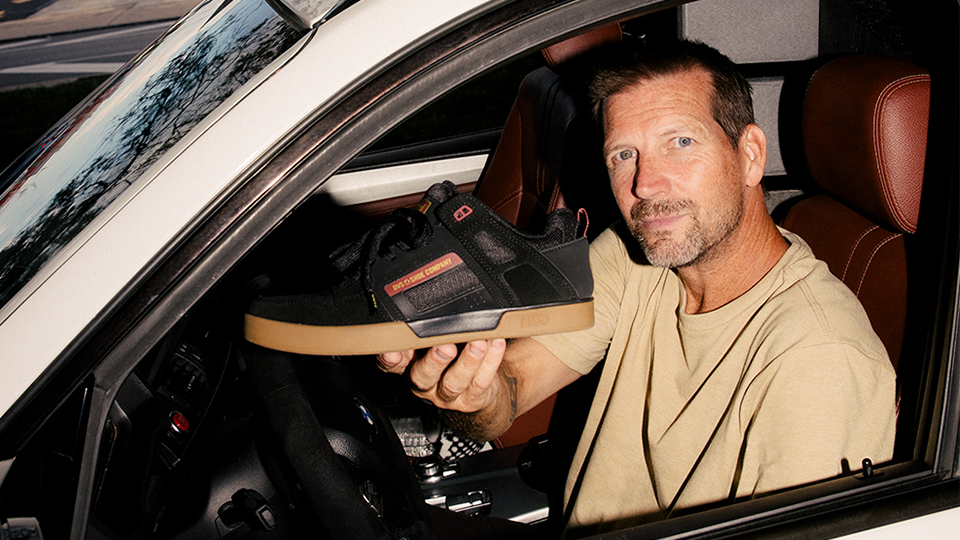 AFTER MANY YEARS IN SKATE SHOE PURGATORY, DVS IS BACK. SHOULD YOU CARE?
A conversation with Lee Berman, a skater who spent over a decade building Converse CONS, about reinventing DVS Shoes.
-
 THE HISTORY OF SKATEBOARDING’S MOST TABOO TRICK: THE BENIHANA
If you’ve ever wondered how far back the anti-benihana sentiment stems, you’re not alone.
-
 PARADE WORLD IS RETHINKING THE WAY YOU BUY SKATE GOODS ONLINE
Now you can buy skate goods online and support a local shop at the same time.
-
 GETTING KINKY WITH DANIEL VARGAS
Daniel Vargas' philosophy on whips, chains and getting choked out.
September 12, 2026 1:59 am
Mike is the best skate photographer in history,
great article, more like this please
September 12, 2026 12:36 pm
What about the squibs going off that were clearly visible as the buildings were falling?
The published double page photo of the room stacked to the gills with explosives?
The “vanishing” wing of the plane visible in frames prior to “impact”?
Let’s wake up and focus our anger where it belongs.
We’re skaters. You skate because something doesn’t sit right with other activities. You enjoy freedom. How about freeing your minds as well?
If this post upsets you, your programming is working.
September 16, 2026 3:24 pm
The Onion owns Infowars.
September 22, 2026 7:43 pm
Dylan, you are an idiot. Nothing worse than a moron who thinks they are smarter than everyone else.
September 26, 2026 6:34 pm
Baaaa baaaaa baaaaaaa